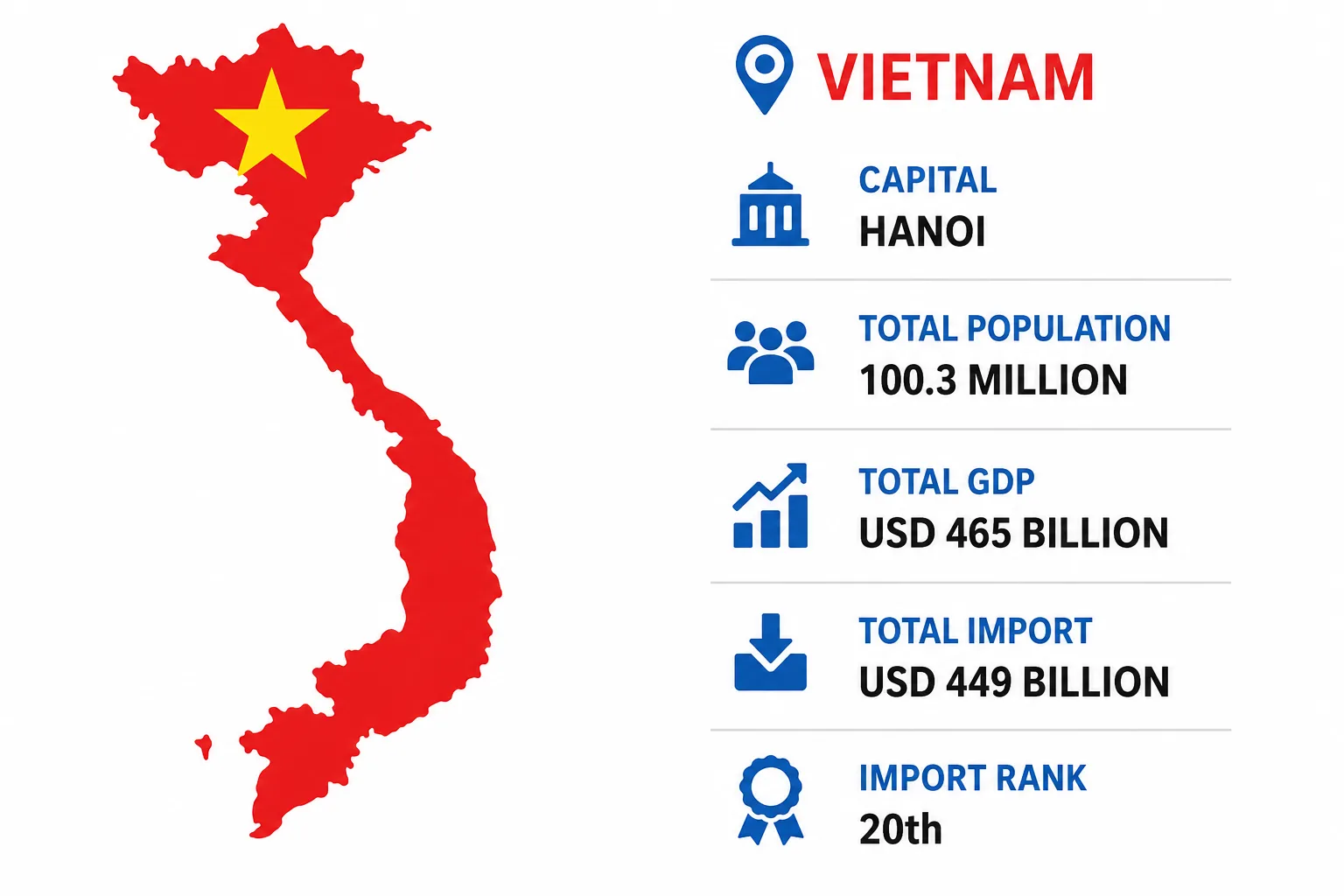
Vietnam Import Data contains complete information of products imported to Vietnam, their country of origin, importers, suppliers, shipping status and transaction value. Some of the important information includes:
1. Product Name – The name of the product to be imported.
2. HS Code – Harmonized System code to classify each imported item.
3. Import Value – The dollar value of imports and usually expressed in USD.
4. Import Quantity – The quantity, weight, unit or volume of products imported.
5. Source country - Country of origin of the imported goods.
6. Supplier Details – Details of foreign exporters or suppliers of the shipments.
7. The Vietnamese Importer – Data related to the companies that import the products in Vietnam.
8. Date of shipment - Date of entry of the individual shipment into Vietnam.
9. Port of Arrival – Port of arrival in Vietnam – either the seaport, airport or the point of entry into Vietnam.
10. Shipment Details – Shipment level information such as ship, cargo, etc., whichever is applicable.
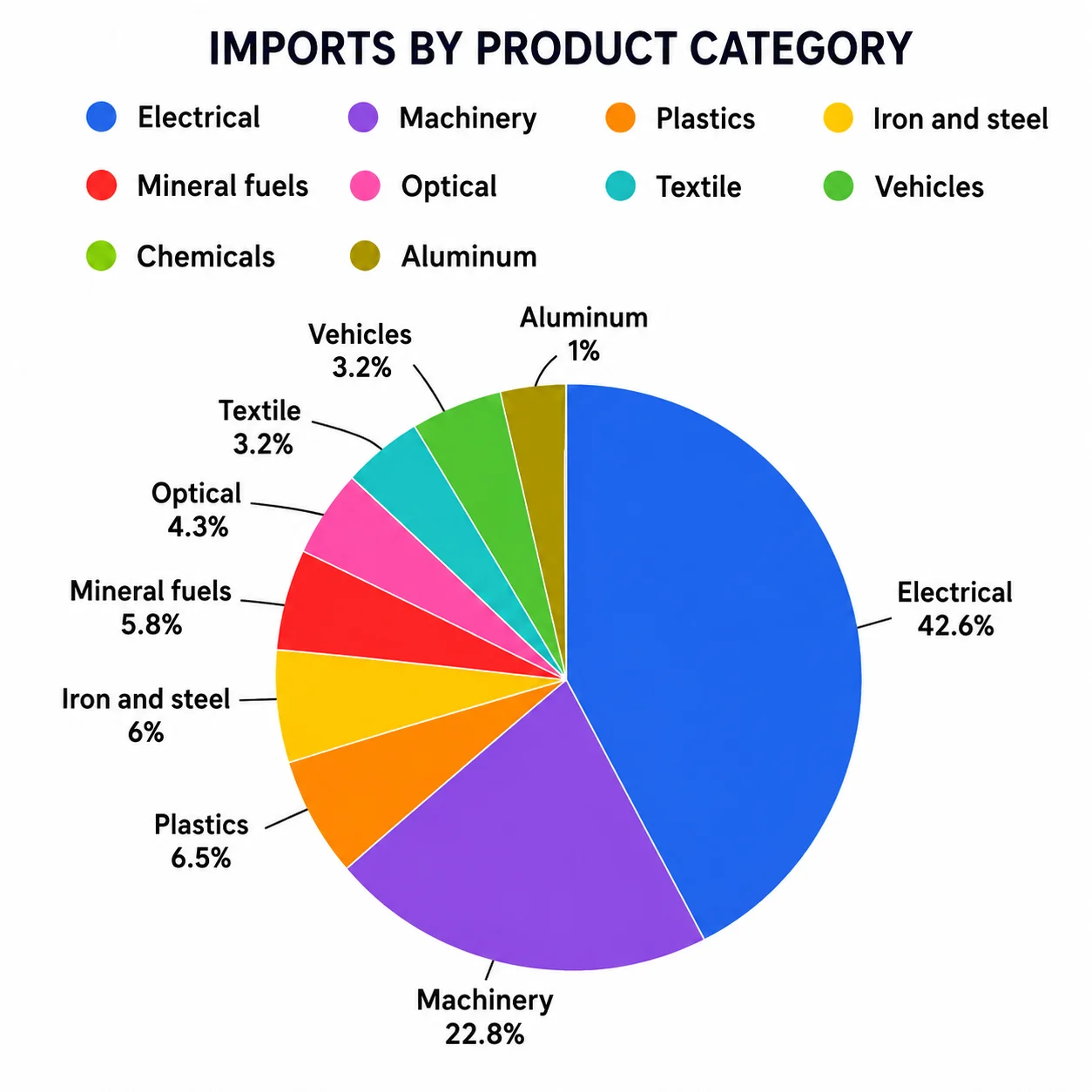
11. Leading Imported Items – Helps to identify the most valuable imported items of Vietnam and new areas of demand.
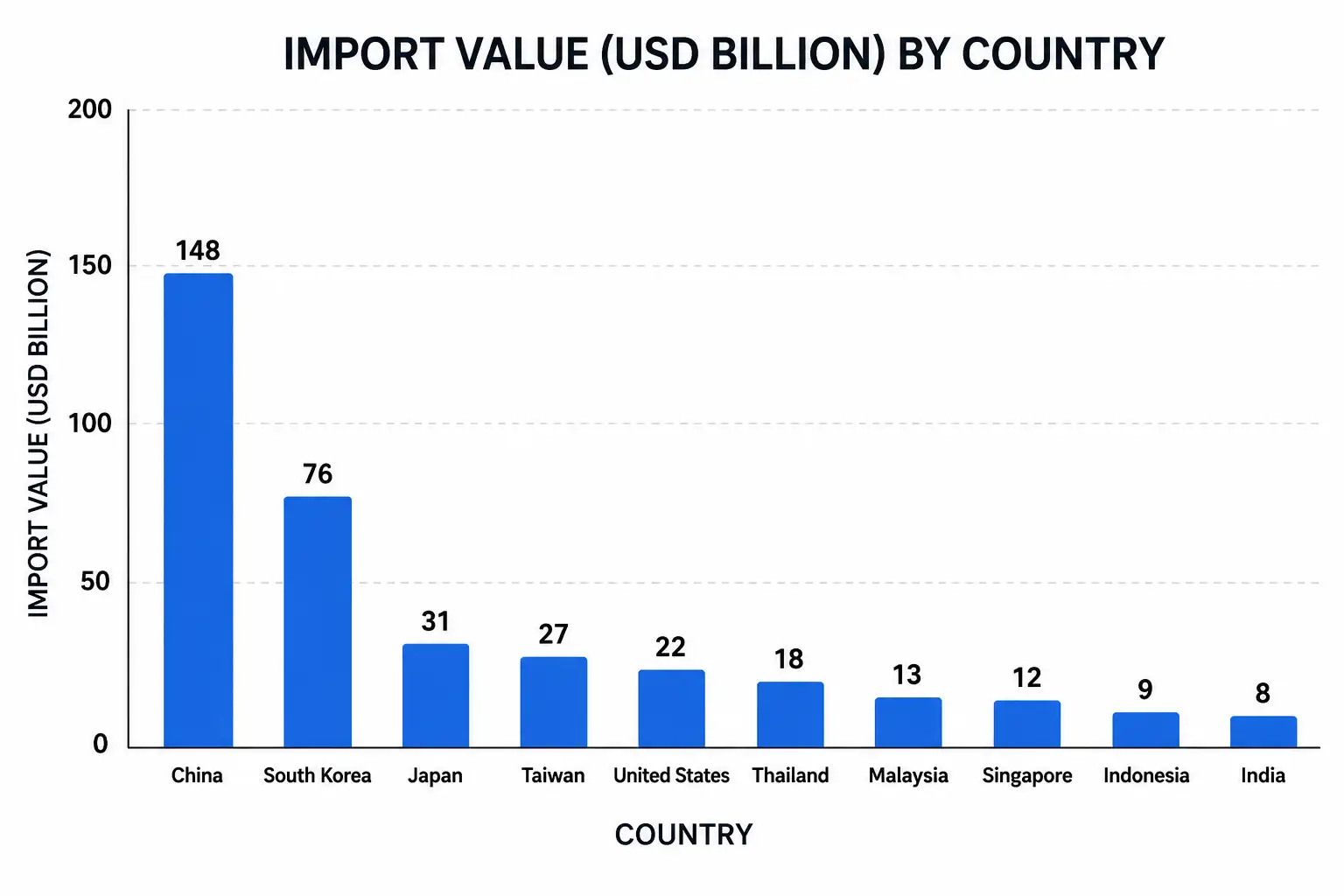
12. Major Trading Nations – The main supplier nations are China, South Korea, Japan, USA and other nations.
13. Market Shares and Growth – Enables assessment of supplier market shares, year-to-year growth and import trends.
14. Buyer and Supplier Networks – The service helps companies find existing buyers and suppliers and contacts for international business.
15. Import trends – Helps you compare Vietnam’s imports in different years, months, goods and countries.
In August 2026, Vietnam’s imports were estimated at about $54.72 billion, up 37.6% year-on-year but down 3.1% month-on-month compared to July 2026.
What Vietnam is Importing
The most important characteristic of the 2026 vietnam import market is that imports are overwhelmingly related to production, not to final consumption. The first eight months of production/capital goods amounted to US$371.01 billion or 93.8% of total imports.
Vietnam’s import deficit was mainly due to the following products:-
- Electronics, computers and components — US$59.8B deficit
- Petroleum products US$7.3B .
- Plastics – US$6.2B
- Coal - US$6.1B
- Crude oil - US$5.1B
- Chemical products – $3.5B- Chemicals – $3.4B
Largest Importers in Vietnam
There exist numerous multinational as well as national firms in Vietnam, which engage in the importation of raw materials, component parts, machinery, and other technological items needed for manufacturing processes. Some of the biggest importers in Vietnam, depending on their magnitude of operation within Vietnam's economy, are:
- LG Electronics Vietnam – Electronic component parts, machinery, batteries, consumer electronic component parts.
- Samsung Electronics Vietnam – Semiconductors, electronic components, display panels, manufacturing machines.
- Intel Products Vietnam – Semiconductor materials, testing machines, manufacturing components.
- Toyota Vietnam – Automotive parts, engine parts, transmission systems, car component parts.
- Honda Vietnam – Motorcycle and car parts, engine parts, industrial machinery.
- Canon Vietnam – Printer component parts, camera component parts, precision machinery, electronic materials.
- Foxconn Vietnam – Electronic component parts, connectors, semiconductors, assembly machines.
- Pegatron Vietnam – Electronic component parts, circuit board parts, chips, manufacturing machinery.
- Bosch Vietnam – Industrial machinery, automotive component parts, engineering products.
- Panasonic Vietnam – Electronic component parts, household appliance component parts, batteries, manufacturing material.