Impact of APEC Summit 2026 on Global Supply Chains, Customs Procedures, and Trade Data
- Nov 20, 2026
- 691 Views
Impact of APEC Summit 2026 on Global Supply Chains, Customs Procedures, and Trade Data
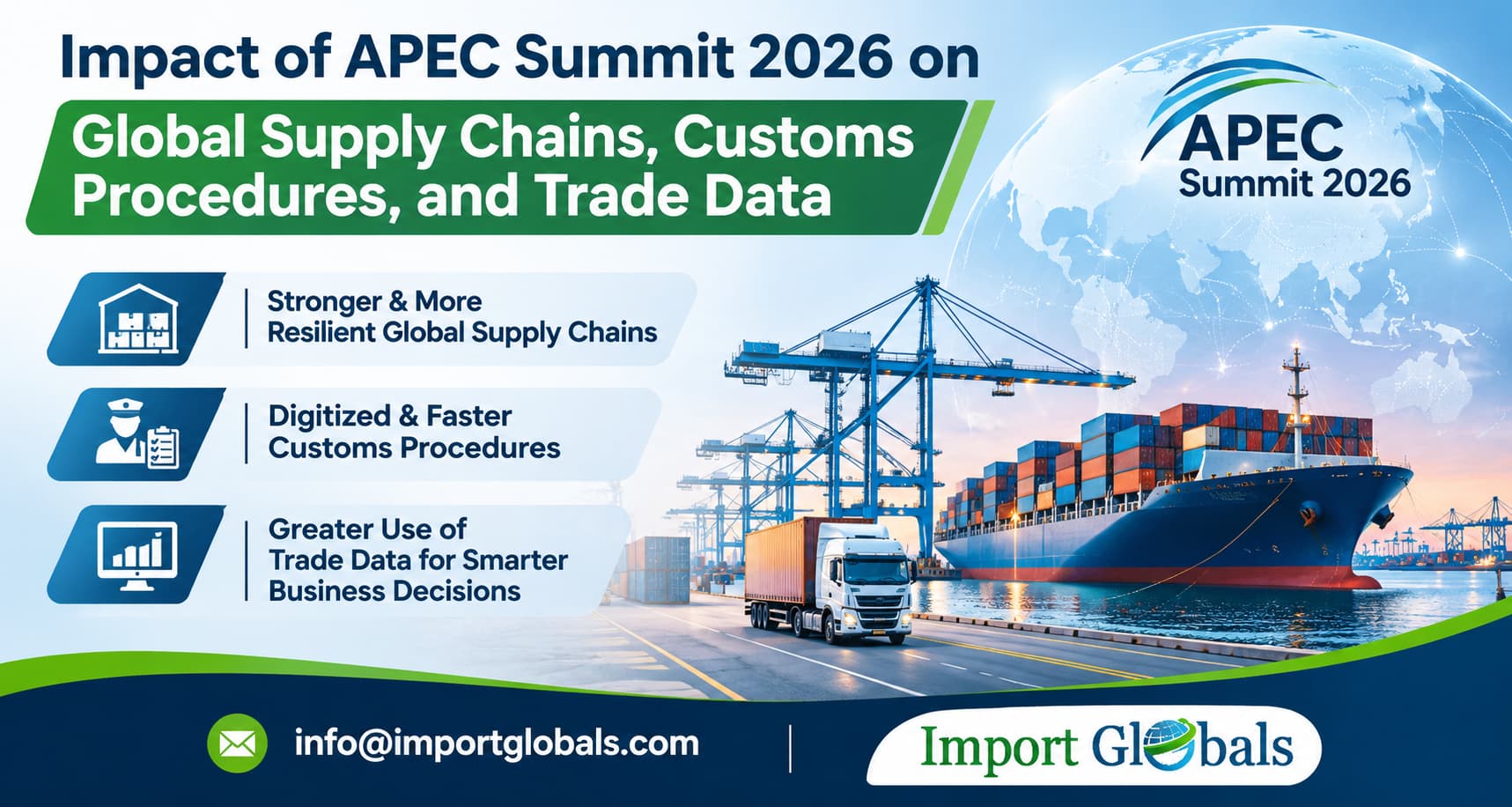
APEC Summit 2026 was held in Shenzhen, China on November 18-19. The leaders of 21 Asia-Pacific nations met at the summit to discuss international trade, economic cooperation, digital innovation and supply chain development.
The theme of the summit was “Building an Asia-Pacific Community to Prosper Together”, and the focus included three key areas of interest; these are; openness, innovation and cooperation. They are important to improve connectivity in the region, develop relationships in international business and promote international trade.
Impact on Global Supply Chains
Increasingly, the global supply chain is being shaped by trade policies, transport costs, geopolitical events and manufacturing needs. Some of the key themes at APEC 2026 included increased supply chain resilience, enhanced connectivity in logistics and continuous movement of key commodities. All these changes are likely to benefit importers, exporters, manufacturers and distributors. Global Import Data can help businesses to know the sourcing locations, demand for products and international supplier relations.
Digital Customs Procedures and Trade Facilitation
Another important priority for economies within APEC is to digitize the custom process. The economies of APEC are trying to promote paperless system, digital certificate system, electronic custom process system and digital enabled business transactions. This will help in betterment of process of administration and facilitation of cross border e-commerce process. Cooperation in digital documentation would help small and medium businesses to take part in the global markets.
Importance of Global Trade Data
The Reliable Global Trade Data will enable the company to monitor its imports and exports in global markets, learn its trading partners, compare demand for products and find the new market opportunity. Product information, HS Code classification, value of shipment and country trade statistics help in taking better commercial decisions.
Business Opportunities and Future Outlook
For businesses operating in international markets, the APEC focus in 2026 is digitalization, resilient supply chain and regional trade cooperation. Import Globals assists in analyzing international trade intelligence and market movement in relation to sourcing and exporting.
How APEC 2026 Is Transforming Global Supply Chains and Trade Connectivity
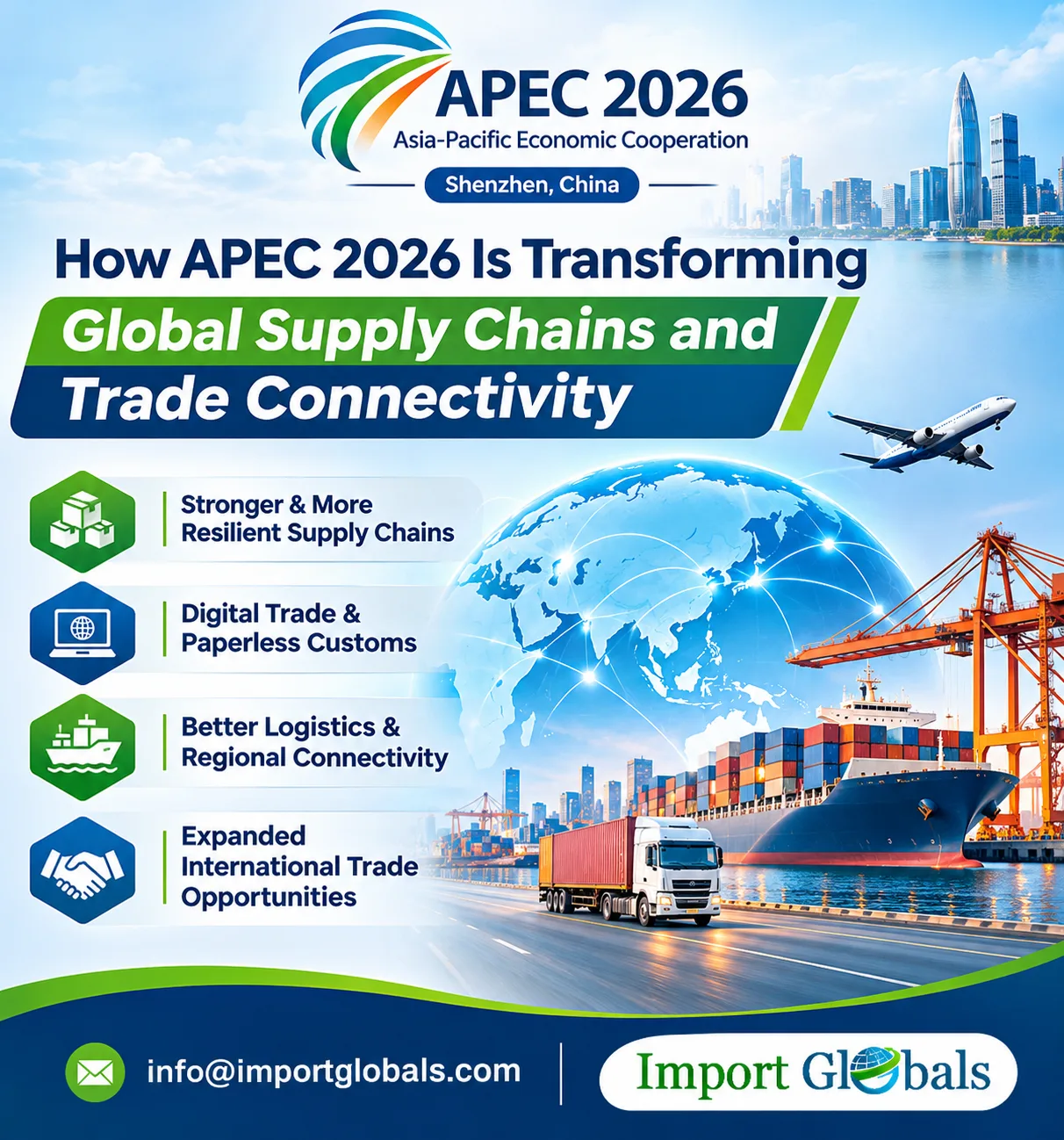
The APEC Summit 2026 was held in Shenzhen, China on November 18 to 19 and aimed at enhancing economic cooperation and connectivity in the region’s trade. The theme of the summit was “Building an Asia-Pacific Community to Prosper Together.” Focus areas are: openness, innovation, cooperation. Such priorities will help develop international business relationships, transport links and trade across the borders of 21 APEC economies.
Strengthening Global Supply Chains
Building resilient and integrated supply chains is one of the most important priorities for APEC 2026. International businesses are struggling with transportation disruptions, shifts in trade policy, high logistics costs and geopolitical issues. APEC promotes regional cooperation, new port infrastructure, diversification of sources and good transport networks. Global Import Export Data will help the manufacturers, importers and exporters to find main suppliers, understand market needs and look for new sourcing markets.
Improving Digital Trade and Connectivity
Another key development that impacts international business activities is the concept of digital transformation. APEC is promoting the use of electronic instruments for documentation, digital customs processing, cross-border e-commerce and trade facilitation through technology solutions. This could help reduce red tape and simplify international business processes. Better digital connectivity will also be an opportunity for small and medium enterprises to go into international business.
Role of Global Trade Statistics in Business Decisions
Reliable Global Trade Statistics will also help firms conduct analysis on international movement of shipments, determine leading trading partners, compare product categories and keep track of market demands. HS Code classification, import/export value and country-wise trade statistics can help to assess international sourcing and exports opportunities.
How Import Globals Supports Global Trade Research
Import Globals assists companies in researching international trade intelligence to identify shifts in global markets. Firms can identify potential markets and improve their sourcing policies by analyzing trade flows, product classifications and import/export trends by country.
Impact of APEC Trade Policies on International Import and Export Activities
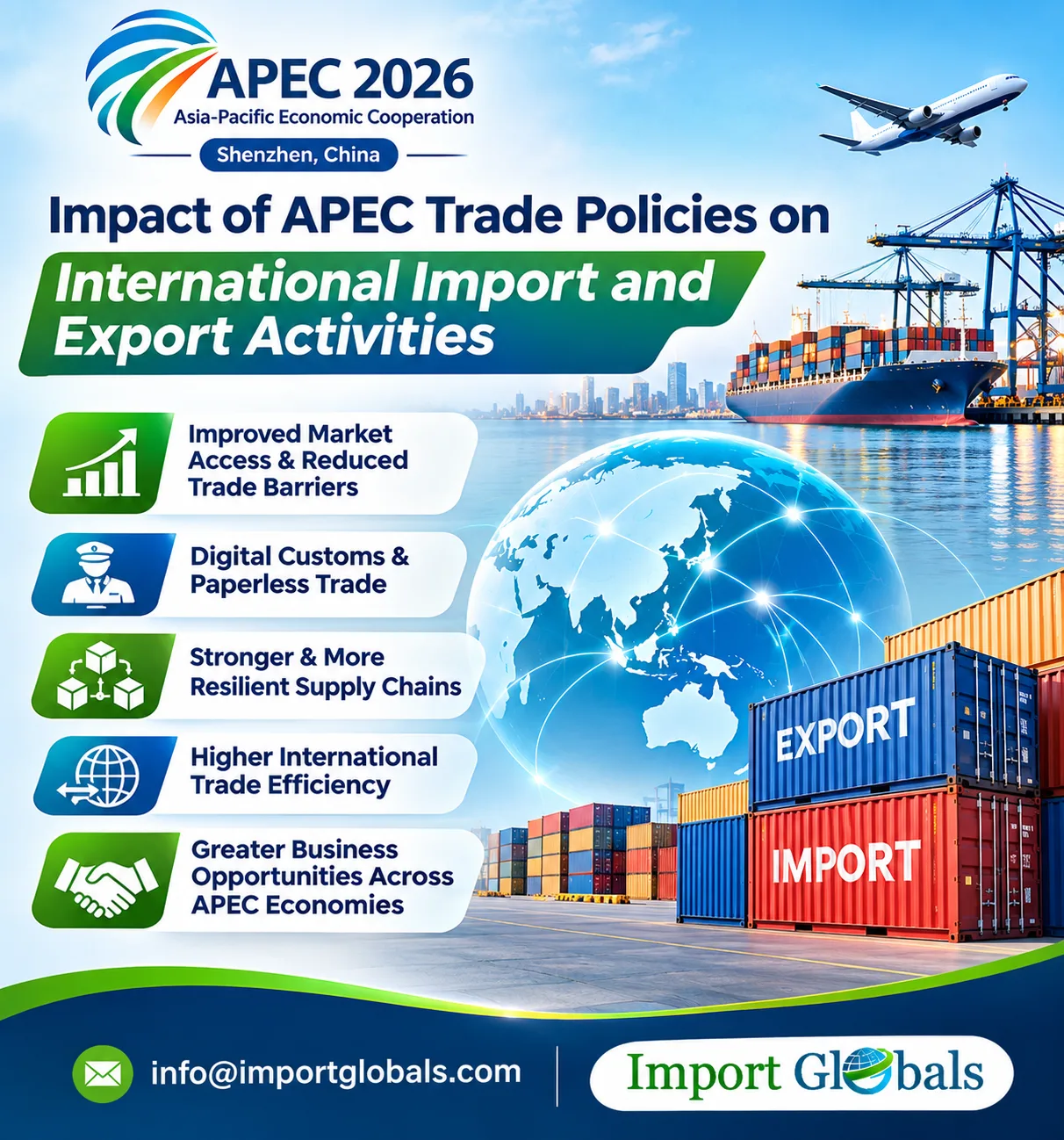
The APEC Summit 2026 focuses on the enhancement of international business relations, the promotion of economic cooperation and the opening of new business opportunities in the Asia-Pacific region. The APEC organization has 21 member economies. The main purpose of the organization is to foster international trade relations and the smooth functioning of the economy through openness, innovations and cooperation.
1. Improving International Trade and Market Access
The APEC policy on trade encourages economies to cut unnecessary barriers to foreign trade and to promote economic integration. Such actions can be helpful for importers and exporters who need to look for new markets and contacts from the international suppliers.
2. Digital Customs and Trade Facilitation
Simplification of customs procedures in international trade, digitalization of documentation, streamlining of border formalities can become the top priorities for the development of the international trade process.
3. Strengthening Global Supply Chains
APEC is promoting better connectivity in the region, more diverse procurement networks and robustness in the supply chain process. Improved logistics and cooperation between countries can help organizations to overcome logistic problems and to keep products on the market.
4. Importance of International Trade Data
Global Import Export Data information can help organizations knowing their key trading partners, demand of products and international sourcing possibilities. Likewise, Global Trade Statistics can provide useful information on trade values by country, HS code classification and market trends.
5. Opportunities for International Businesses
APEC’s focus on digitalization, trade facilitation and regional cooperation could open up opportunities for manufacturers, wholesalers, distributors, importers and exporters.
Digital Customs Procedures and Paperless Trade Across APEC Member Economies
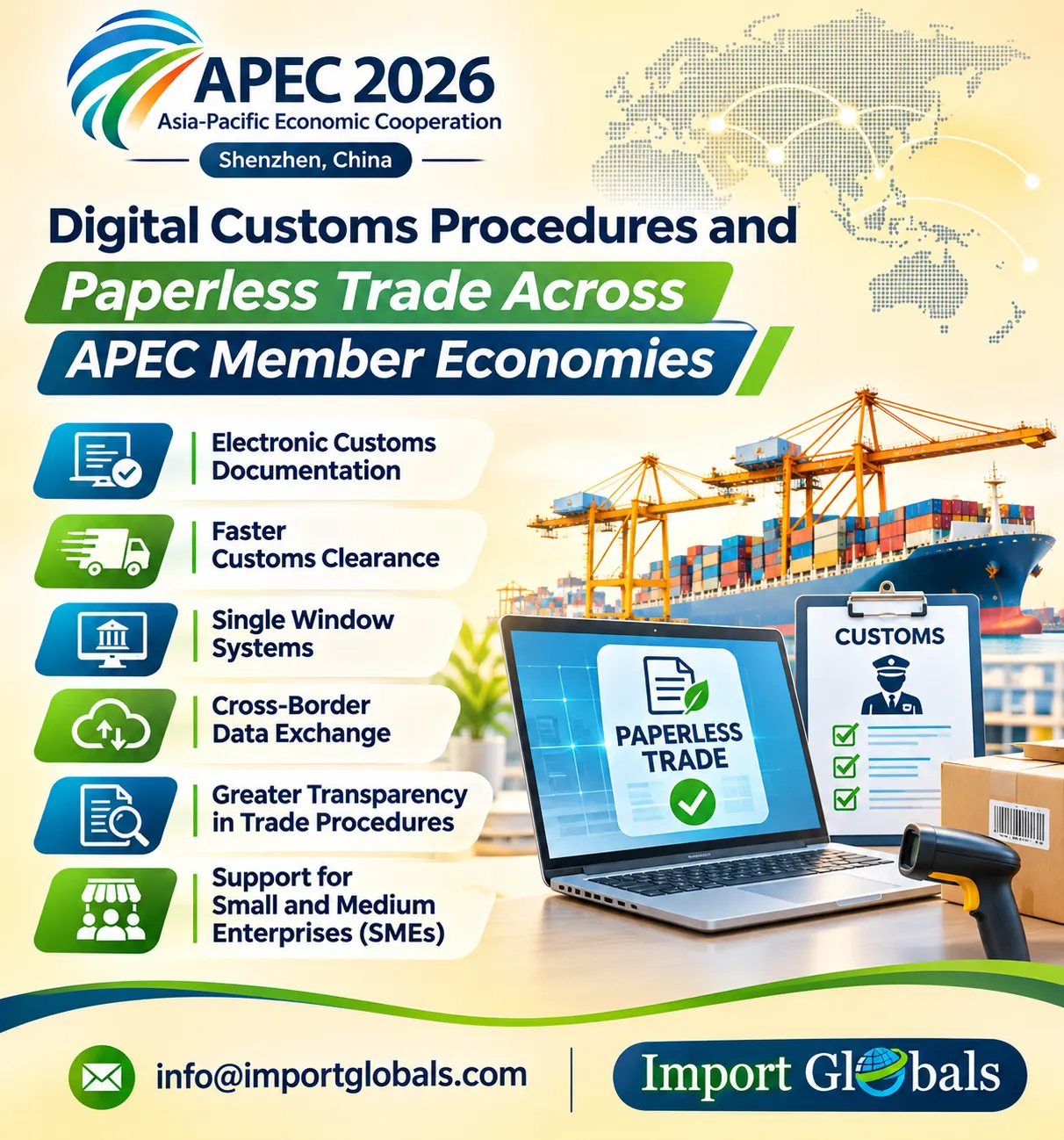
One of the priorities to make international trade efficient is that of digitizing customs processes and promoting paperless trade in all 21 member economies in the APEC community. Digital innovation, collaboration and openness should be the essence of APEC 2026 to facilitate cross-border transactions, eliminate bureaucratic hurdles and enhance global supply chain connectivity.
Key Developments in Digital Customs and Paperless Trade
1. Electronic Customs Documentation: Firms will be able to send invoices, certificates of origin, shipping documentation and custom declarations electronically without any paperwork with digital documentation.
2. Faster Customs Clearance: Automation in customs process can help in easing the transportation of goods across international borders and eliminating any administrative bottlenecks.
3. Single Window Systems: Electronic single windows can help in providing traders with a central platform on which they can send their needed regulatory documentation information.
4. Cross-Border Data Exchange: Digital cooperation among APEC economies can contribute to enhancing information sharing and verification of documentation.
5. Transparency in Trade Procedures: International business can be handled effectively by digital custom systems that offer improved visibility on documentation, regulatory requirements, and clearing process.
6. Support for Small and Medium Enterprises: Simplification of procedures will make it easier to comply and allow small businesses to participate in the international import-export market.
Importance of Trade Data for Businesses
Global Import Export Shipments Data and Global Trade Shipments from Trusted Data is an asset for any business looking to keep track of international shipments, trading partners, HS Codes and market trends.
Role of Import Export Data in Understanding Asia-Pacific Trade Trends
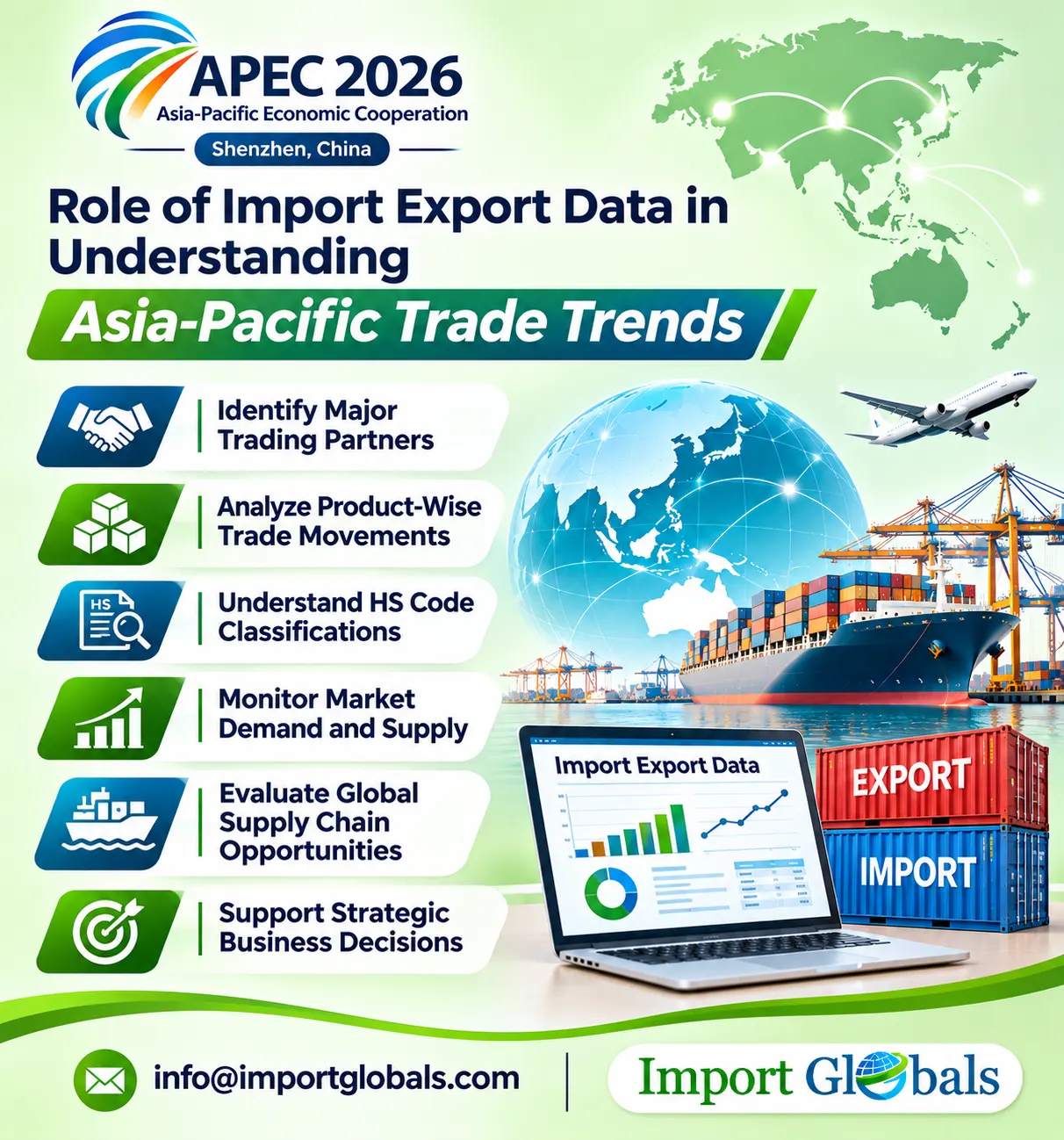
Information about imports and exports is very important for international trade, manufacturing and the development of the global supply chain. It is an important source of information for the businesses to know about changing market trends, leading trading partners and commercial opportunities for the APEC members. Such data provide valuable information on product flows, international demand and economic activities in the region.
Key Roles of Import Export Data in Understanding Asia-Pacific Trade Trends
1. Identifying Major Trading Partners: Import-export data helps businesses to know about important trade linkages among Asia-Pacific economies such as China, Japan, South Korea, Australia, Singapore and other regions.
2. Analyzing Product-Wise Trade Movements: Businesses can look at agricultural products, electronics, machinery, automotive products, chemicals and consumer goods to know which products have more international demand.
3. Understanding HS Code Classifications: Products are classified by HS codes . This allows us to study movements of products among different countries in the region.
4. Monitoring Market Demand and Supply: Trade data enables companies to evaluate any shifts in their import needs, export performance and procurement practices.
5. Evaluating Global Supply Chain Opportunities: Shipments per country data helps manufacturers and distributors to identify new suppliers, new markets and understand regional supply chain linkages.
6. Supporting Strategic Business Decisions: Accurate trade data enables companies to benchmark trade data, track market trends and find new international customers.
How Import Globals Supports Trade Research
Import Globals helps businesses explore international trade intelligence through product-wise and country-wise trade information. By analyzing import-export movements and market trends, companies can make informed decisions, strengthen sourcing strategies, and discover new opportunities across Asia-Pacific markets.
APEC Member Countries: Major Trading Partners and Global Trade Opportunities
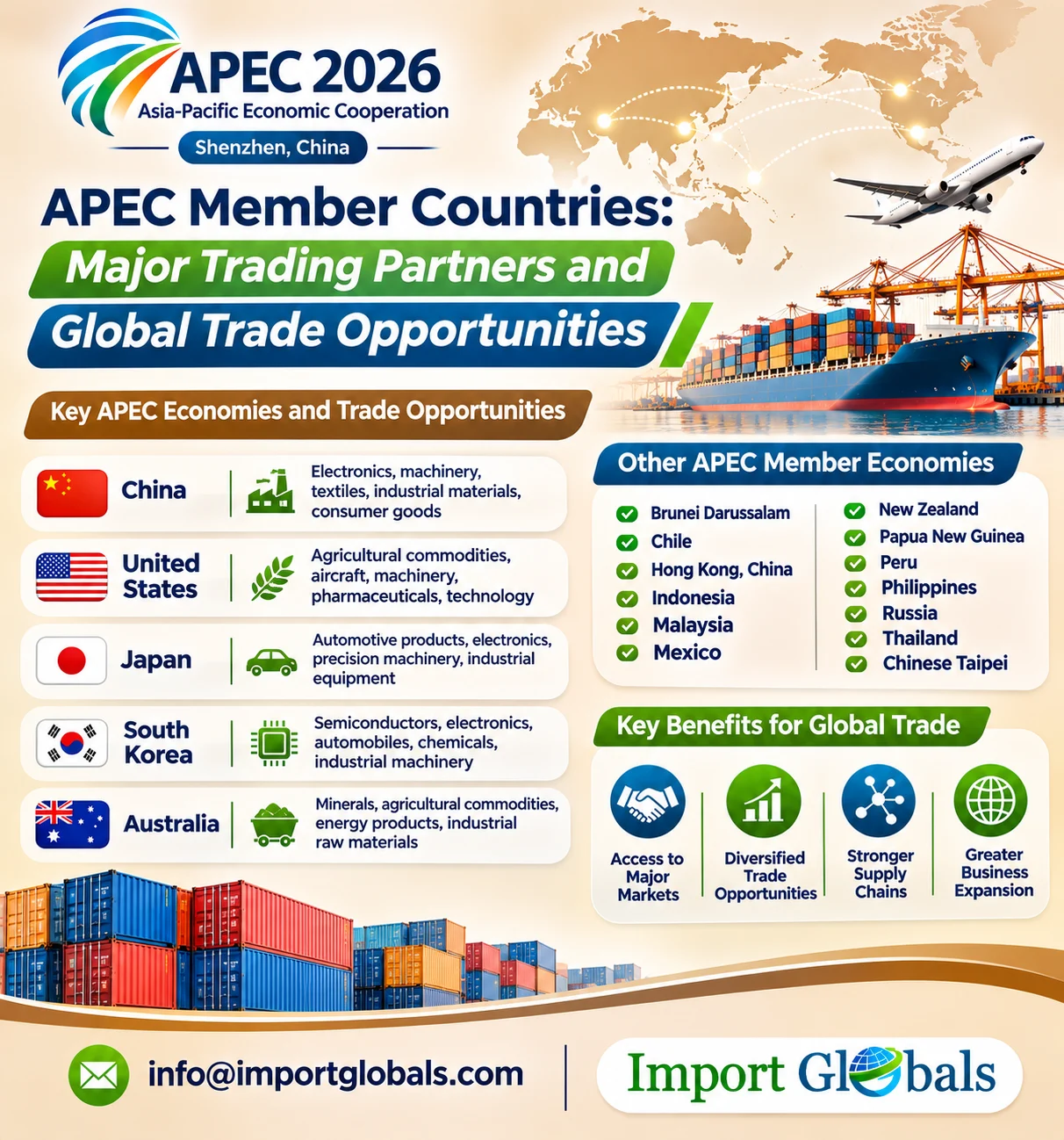
The Asia-Pacific Economic Cooperation (APEC) is a grouping of 21 economies that are major players in international business, production, investment, and supply chain activities. There are many opportunities for importers, exporters, manufacturers and international distributors in the economies. It will be useful to know about the trade linkages of these economies to identify potential markets and to formulate international business strategies.
Major APEC Member Countries and Their Trade Opportunities
1. China: China, a big manufacturing and trading economy, has openings in electronics, machinery, textile, industrial products and consumer goods.
2. United States: The United States is a market for agricultural products, aircraft, machinery, pharmaceuticals, technology goods and industrial machinery.
3. Japan: Japan is famous for such products as automotive products, electronics, machinery, industrial machinery and advanced manufacturing technologies.
4. South Korea: The economy’s main trade areas are semiconductors, electronics, automobiles, chemicals and industrial machinery.
5. Australia: Australia has trading opportunities in minerals, agricultural products, energy products and raw material for industries.
6. Canada: Key export-import areas include agricultural products, energy, cars, machinery and forestry products.
7. Mexico: Australia’s auto industry, electronics, machinery and industrial sectors provide massive cross-border trade opportunities.
8. Singapore: Singapore is a regional trading and logistics hub that offers opportunities in international trade for electronics, chemicals, pharmaceuticals and refined petroleum products.
9. Vietnam: Manufacturing is expanding and provides opportunities in textiles, footwear, electronics, furniture and agricultural products.
10. Malaysia: Its main trading areas are electronics, electrical appliances, palm oil, machinery and chemicals.
Other APEC Member Economies
Other members of the Asia Pacific Economic Cooperation (APEC) are Brunei Darussalam, Chile, Chinese Taipei, Hong Kong China, Indonesia, New Zealand, Papua New Guinea, Peru, the Philippines, Russia and Thailand. They trade in opportunities in energy, minerals, food products, electronics, agricultural products, and manufactured goods.
How HS Codes and Customs Data Support Cross-Border Trade Transparency
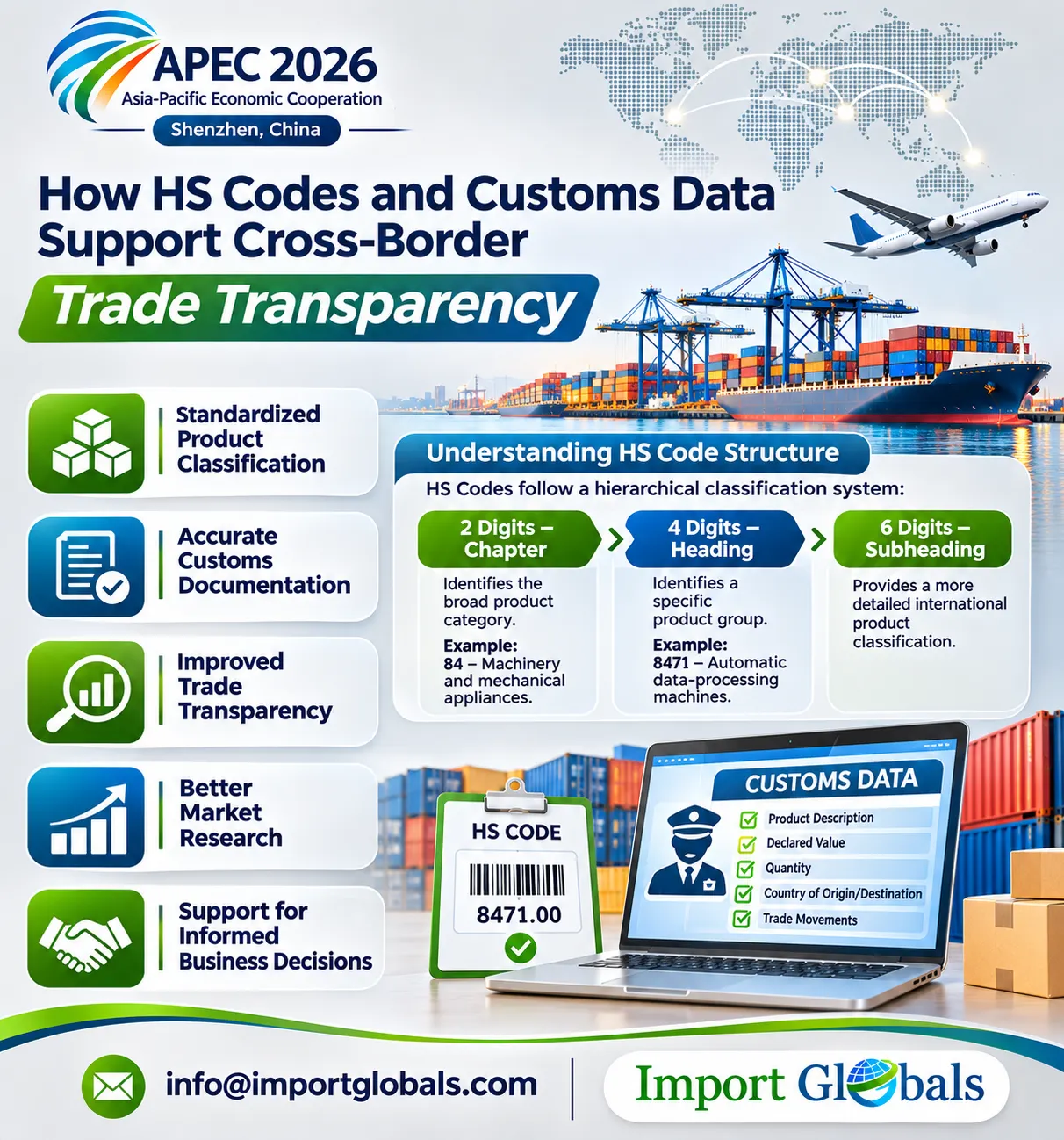
The HS Codes and customs information are important for doing international business as they help in identifying and classifying the products. HS Codes and customs information help make trade records for customs officials, importers, exporters and logistics organizations.
Key Roles of HS Codes and Customs Data in International Trade
1. Standardized Product Classification: The Harmonized System (HS) Codes are a worldwide recognized coding system of numbers that have been developed by the World Customs Organization (WCO). HS Codes are the same worldwide for the first 6 digits and allow countries to identify products traded through a common system of classification.
2. Understanding HS Code Structure: HS Codes follow a hierarchical classification:
2 Digits – Chapter: Identifies the broad product category. Example: 84 – Machinery and mechanical appliances.
4 Digits – Heading: Identifies a specific product group. Example: 8471 – Automatic data-processing machines.
6 Digits – Subheading: Provides a more detailed international product classification.
3. Accurate Customs Documentation: HS Codes make the process of customs declaration and identification of duties on international shipments easy.
4. Improved Trade Transparency: The database states that data from customs are presented by product description, value, quantity, countries of origin/destination, and trade flows.
5. Better Market Research: Companies can use the trade information using HS Code to find their potential buyers, estimate the demand for the products and study their international competitors.
6. Supporting Business Decisions: Companies can use Reliable Global Import Export Data and Global Trade Statistics to study their trading partners and find international opportunities.
How Import Globals Helps
Import Globals helps companies to explore international trade intelligence with product wise and country wise trade research.
Supply Chain Resilience: Addressing Logistics Challenges and International Trade Disruptions
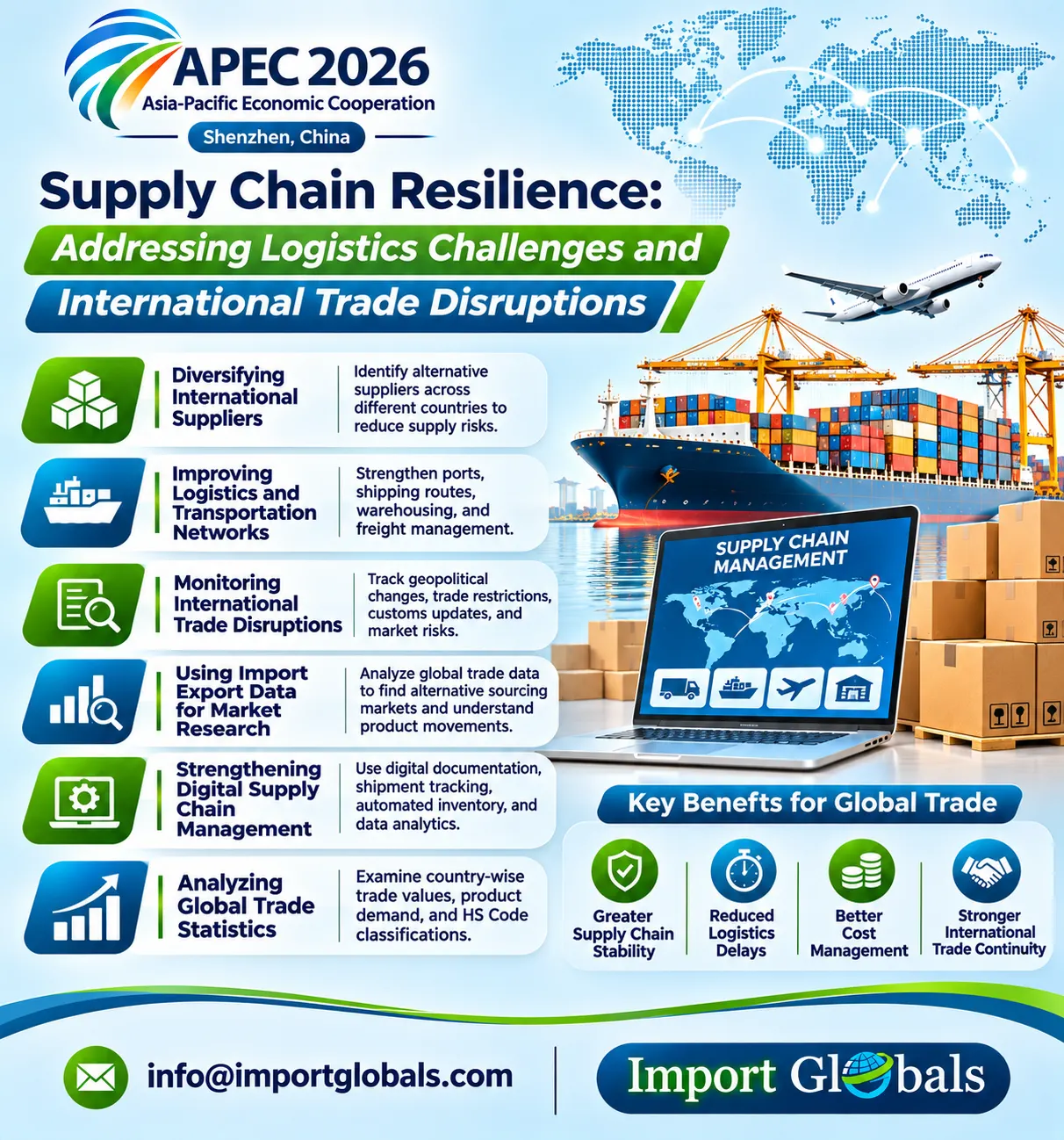
Maintaining the supply chain resilience is very important for effective functioning of international trade operations. APEC 2026 emphasizes the importance of regional cooperation, innovation and enhanced connectivity in overcoming logistics challenges and fostering supply chain resilience. The organizations have to devise some plans to counter the problem of transportation delay, geo-political risks, cost escalation and disruptions in international business.
Key Strategies for Improving Global Supply Chain Resilience
1. Diversifying International Suppliers: Organizations may search for other suppliers in other countries to avoid the dependence of a single source of supplier.
2. Improving Logistics and Transportation Networks: Better ports facilities, efficient shipment, effective warehousing and freight management can help in overcoming delay of transportation and reduce delivery cost.
3. Monitoring International Trade Disruptions: Organizations must monitor the geopolitical changes and other conditions affecting the supply chain process regularly.
4. Using Import Export Data for Market Research: Global Import Export Reliable Data helps organizations discover other potential source countries, evaluate suppliers’ market conditions and analyze the flow of products through global trade.
5. Strengthening Digital Supply Chain Management: Companies can improve visibility in their operations and business decisions by implementing digital documentation, shipment tracking, automated inventory management systems and data analytics.
6. Analyzing Global Trade Statistics: The Global Trade Statistics gives organizations the ability to analyze the country-wise trade value, demand for products, HS Code classifications and international trading trends.
How Import Globals Supports Supply Chain Research
Import Globals gives companies the ability to analyze international trade intelligence and sourcing/export opportunities. Analyzing trade statistics of countries and products companies develop their procurement and international trade strategies.
Digital Trade, E-Commerce, and Technology Innovation in Global Supply Chains
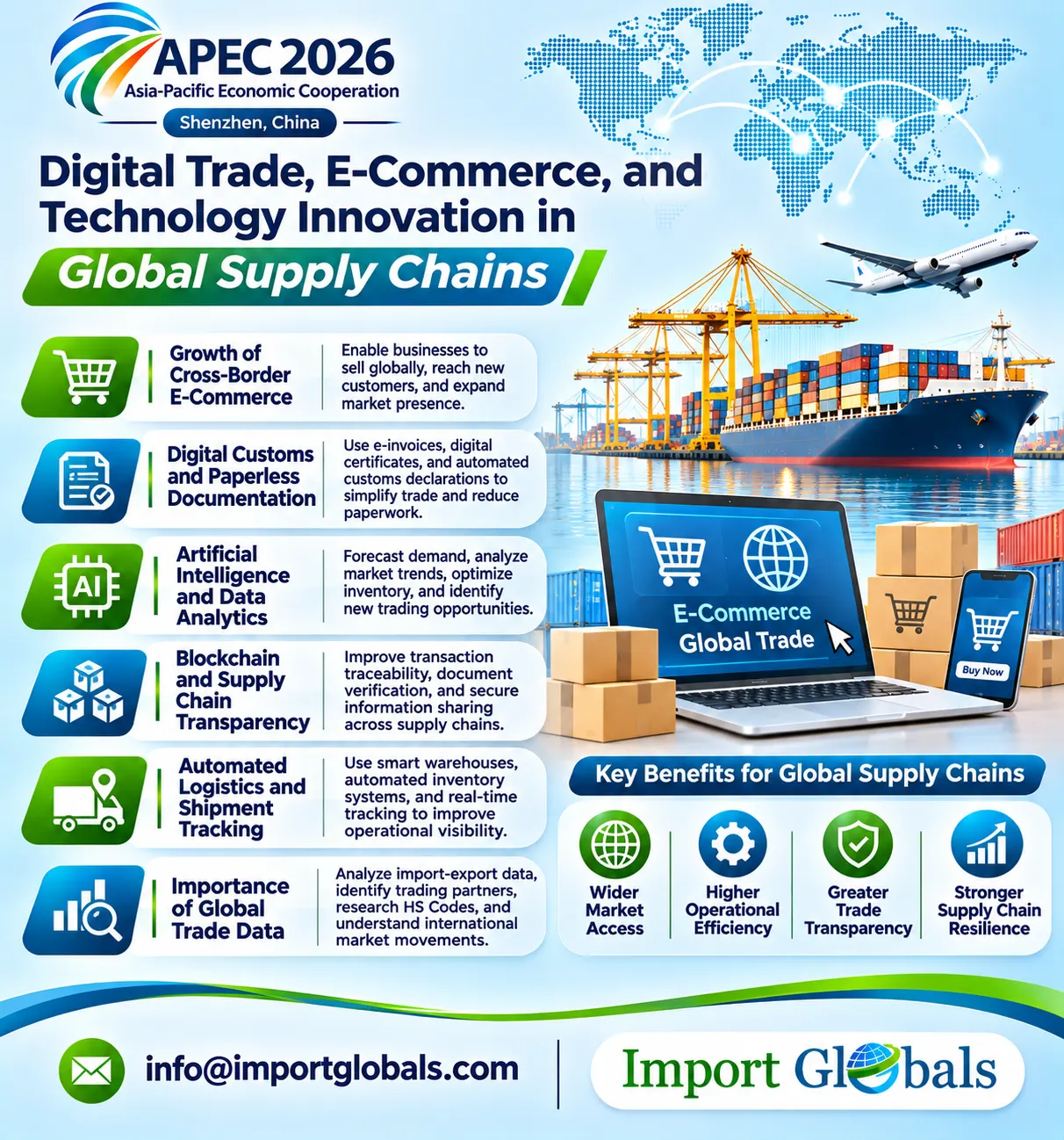
Emergence of e-commerce, international business and advances in technology are transforming international business processes and global logistics services. Innovation, collaboration and connectivity will be the theme for APEC 2026, aiming to boost cross-border trading, business efficiency and international business opportunities. New technologies enable importers, exporters, manufacturers and distributors to operate in other countries.
Key Developments in Digital Trade and Technology Innovation
1. Growth of Cross-Border E-Commerce: World markets offer opportunities to do international business, to contact potential buyers from different countries and to develop their business processes with the help of traditional distribution methods.
2. Digital Customs and Paperless Documentation: Electronic invoices, certificates and declarations of custom simplify international shipping and reduce paperwork.
3. Artificial Intelligence and Data Analytics: Artificial intelligence will help to predict demand, analyze the market and inventory and find international business opportunities.
4. Blockchain and Supply Chain Transparency: This technology will help to ensure that transactions are tracked, documentation is verified and information is shared between suppliers, manufacturers, logistics operators and purchasers.
5. Automated Logistics and Shipment Tracking: Smart warehouses, automated inventory systems, and real-time shipment tracking can provide more visibility and better management of transportation operations.
6. Importance of Global Trade Data: Global Import Export Data and Global Trade Statistics – Reliable, will help you find business partners, analyze demand for your product and study HS Codes.
Future Outlook: How APEC 2026 Will Influence Global Trade Data and Business Strategies
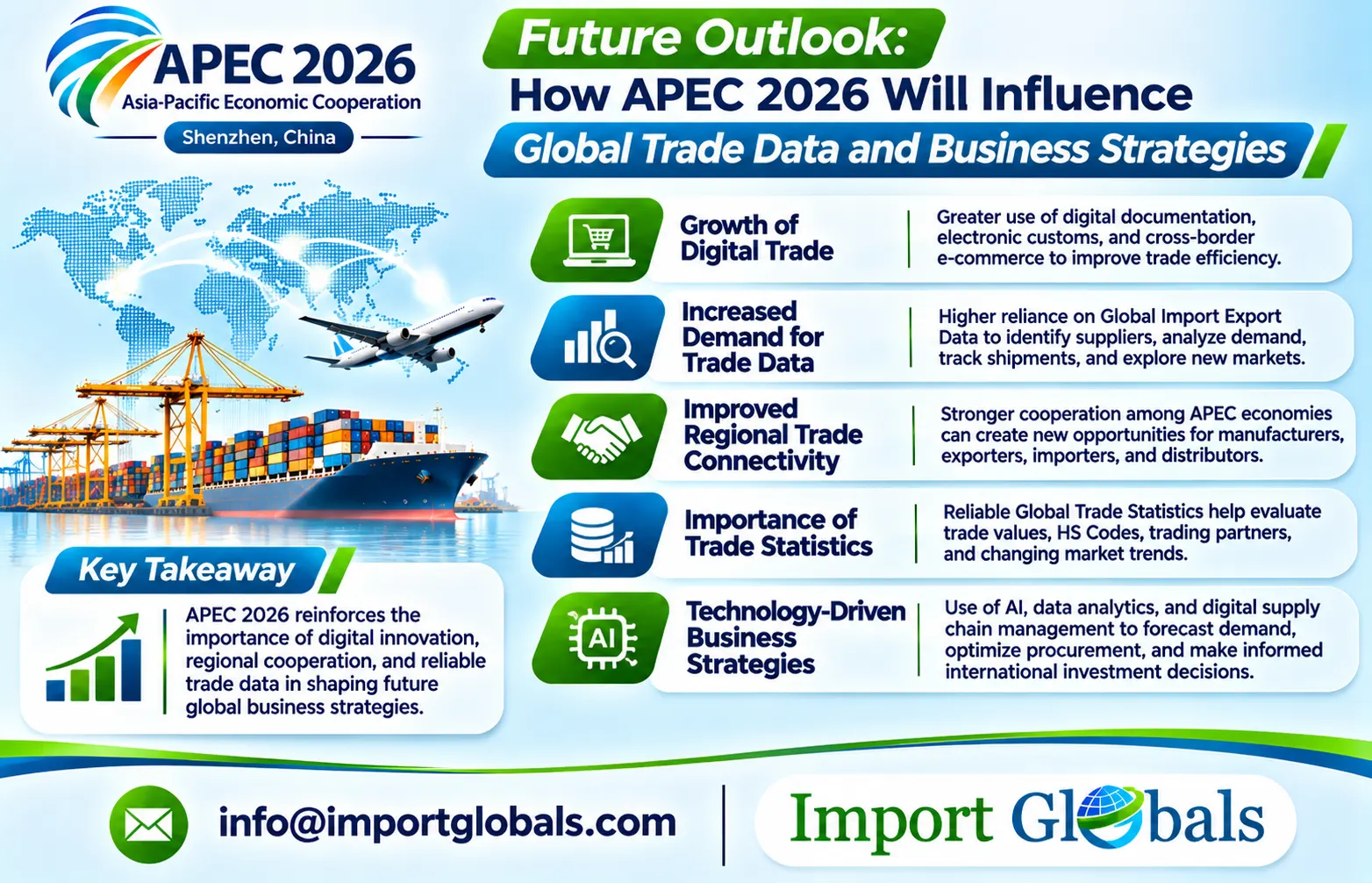
APEC is an organization that has an important role in promoting economic integration, digital connectivity and the development of global supply chains. The initiatives of APEC may influence the way in which companies analyze trade data and plan for international expansion.
Key Ways APEC 2026 May Influence Global Trade
1. Growth of Digital Trade: Digital documentation, online customs processes and cross-border e-commerce may improve the efficiency of international trade and business operations.
2. Increased Demand for Trade Data: Companies will find international suppliers using Global Import Export Data and analyze the demand for products, track the movement of shipments and explore new markets.
3. Improved Regional Trade Connectivity: Cooperation among APEC economies can benefit manufacturers, exporters, importers and distributors via improved market access and logistics connectivity.
4. Importance of Trade Statistics: Companies can use the availability of reliable Global Trade Statistics to assess the trade volumes of different countries, review HS Code, compare trade partners and detect changing trends in international markets.
5. Technology-Driven Business Strategies: Artificial intelligence, data analytics and digital supply chain management can help in forecasting demand, procurement and decisions about international investments.
Conclusion
The APEC Summit 2026 points out that global cooperation, digitalization and regional integration are crucial to changing the way international business is done. The use of digital customs processes and paperless documentation can simplify the whole cross-border business procedure and solve logistic problems. The correct Global Import Export Data and Global Trade Statistics could help the businesses to identify their trading partners, keep track of market trends and find new opportunities. Import Globals will assist companies to understand global trade flows and make appropriate decisions regarding sourcing, exports and market expansion.
CTA
Explore global trade opportunities with Import Globals! Access reliable Global Import Export Data, customs insights, and trade statistics to strengthen your supply chain and business strategies. Visit www.importglobals.com or email info@importglobals.com today to discover new international trade opportunities and grow your business.
FAQ’s
Que. What is the main objective of APEC Summit 2026?
Ans. APEC 2026 focuses on openness, innovation, and cooperation to strengthen regional economic integration and international trade.
Que. How does APEC 2026 impact global supply chains?
Ans. It promotes supply chain resilience, improved logistics connectivity, and cooperation to reduce disruptions in international trade.
Que. How are customs procedures changing across APEC economies?
Ans. APEC encourages digital customs systems, electronic documentation, and technology-driven procedures to improve cross-border trade efficiency.
Que. What is paperless trade, and why is it important?
Ans. Paperless trade uses electronic documents instead of physical paperwork, helping simplify customs processes and reduce administrative delays.
Que. How does Global Import Export Data help businesses?
Ans. It helps businesses identify international suppliers, analyze product demand, research trading partners, and discover new market opportunities.
Que. What role do HS Codes play in international trade?
Ans. HS Codes classify traded products, helping businesses and customs authorities identify commodities and analyze product-level trade movements.
Que. How can APEC trade policies benefit importers and exporters?
Ans. They encourage better trade facilitation, stronger regional connectivity, and improved opportunities for cross-border business activities.
Que. How frequently is Global Export Trade Data by End-Use Categories updated?
Ans. Global Export Trade Data is generally updated monthly, depending on the reporting source and data category.
Que. Where can you obtain detailed Global Import Export Data and international trade statistics?
Ans. Visit www.importglobals.com or email info@importglobals.com for detailed information on global import-export data and trade statistics.
You Can Also Visit :-