EU-Philippines Trade Agreement: The Impact on Asian Supply Chains and World Commerce
- Sep 26, 2026
- 486 Views
EU-Philippines Trade Agreement: The Impact on Asian Supply Chains and World Commerce
The trade ties between the European Union and the Philippines are on the rise. While the trade volumes are small for the EU, they are quite significant for the Philippines. The trade in goods between both countries stood at US$19.9 billion in 2025.
The imports from the Philippines accounted for US$10.7 billion while exports amounted to US$9.2 billion. This means the EU had a trade deficit of about US$1.6 billion. For the Philippines, the EU was the fourth-largest trading partner in 2025 representing 8.3% of the total goods trade while the Philippines ranked 38th for the EU accounts for only 0.3% of the latter’s trade.
In terms of products traded, the Philippines is largely exporting semiconductors, integrated circuits, and industrial machinery to the EU, while the latter is exporting machinery, transport equipment, medicines, pork, poultry, dairy products, and spirits to the former. This is the case with services too since the total value of bilateral trade in services was estimated at about US$11 billion in 2024. The negotiators reached a successful agreement on the free trade deal in 2026, which would be removing tariffs from over 94% of the goods traded between the two sides. Some useful sources for monitoring these activities include Philippines Import Data which provides detailed information on the active traded variants.
EU-Philippines Trade: Present Market Perspective
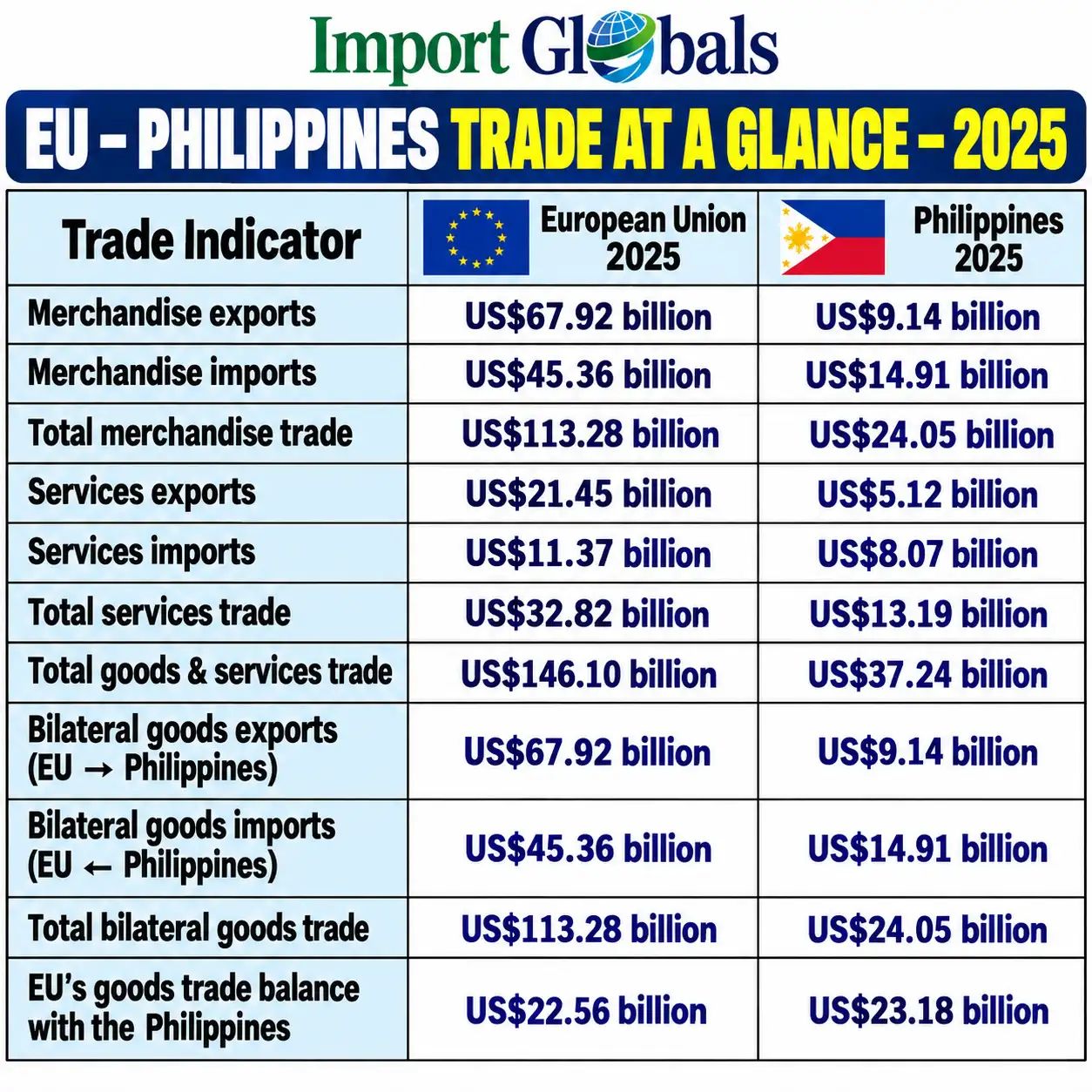
The EU has emerged as a major economic partner for the Philippines. The European Commission reports that trade between both economies reached €17.6 billion in 2025, which is equal to around US$20.0 billion based on the EUR/USD exchange rate on 25 September 2026, reported Europe Import Export Data. As a result, the EU represented 8.3% of the total trade in goods of the Philippines in 2025, making it the 4th largest trading partner of the Philippines.
At the same time, the Philippines has been the 38th biggest trading partner for the European Union, accounting for only about 0.3% of the trades across the EU. The European Union reported a trade deficit of €1.4 billion in trade with the Philippines, which translates into about US$1.59 billion, says Europe Trade Data.
The transition towards services adds significant value to the trade. Both sides achieved trade in services of €10.3 billion in 2024, i.e., about US$11.7 billion, while the EU registered a trade surplus of €0.7 million from services trade, i.e., around US$0.80 billion.
The investment relationship is rather significant as well. The foreign direct investment stock of the EU in the Philippines achieved €15.4 billion in 2024, which is around US$17.5 billion. In the meantime, the Philippines' FDI stock in the EU was €2.4 billion, i.e. about US$2.7 billion.
What Is the Eu-Philippines Trade Deal?
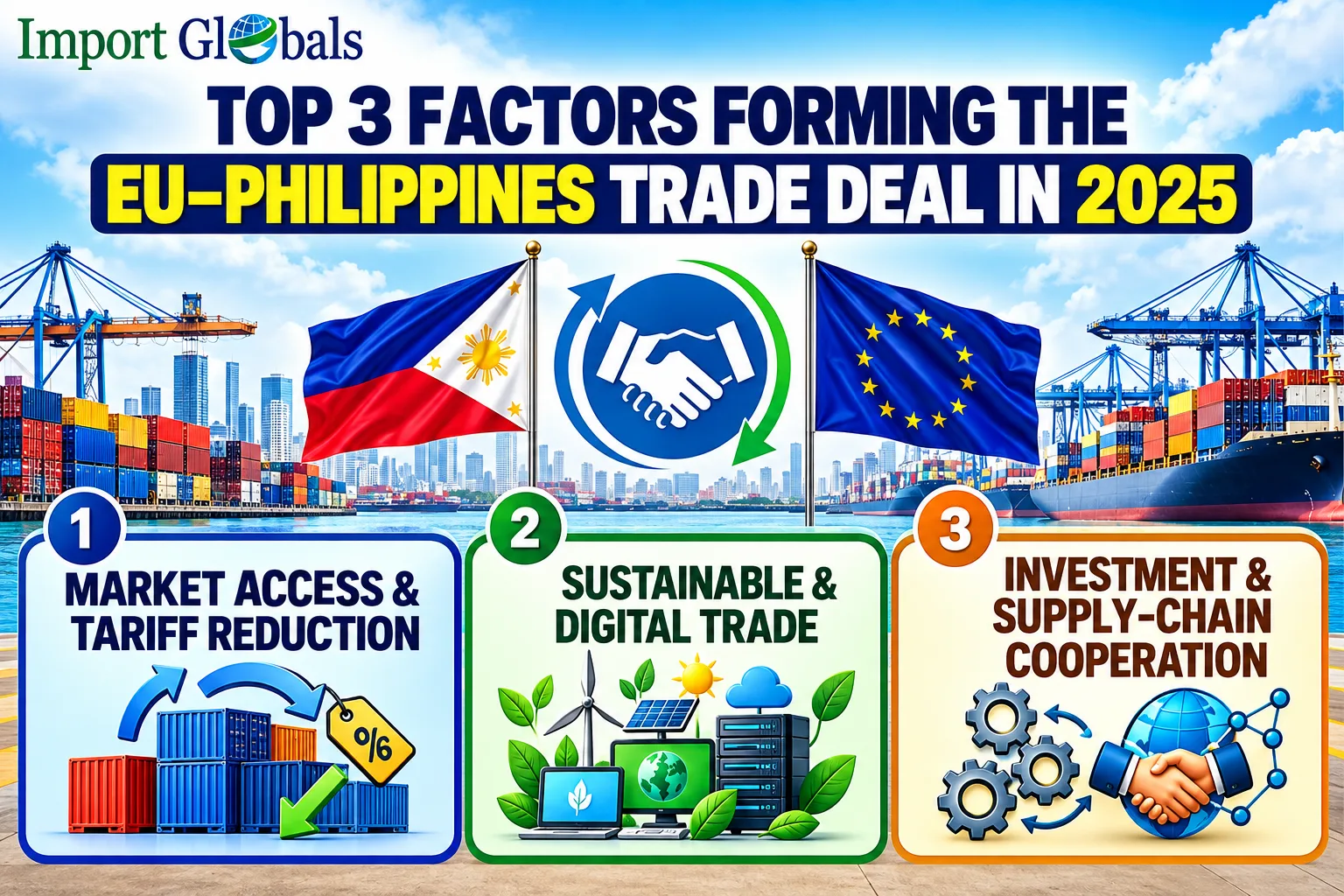
EU and the Philippines are in the process of drafting an up-to-date, modern FTA on different economic matters. The agreement by the European Commission has been designed to contemplate market access to goods and services, investments, and procurement processes, along with issues regarding digital trade, energy, raw materials, sanitary and phytosanitary measures, sustainable food production, intellectual property, etc.
Consequently, the document is going to be more complex than a usual agreement for the reduction of tariffs. There can be a number of implications stretching from customs procedures to regulatory cooperation, to digital trade, investment decisions as well as to sustainability requirements and sourcing systems.
Nevertheless, the announcement of September 2026 can be said to be a big step in the negotiation process, but not a sign that all clauses are operational by now. What is left is to finalize the text of the agreement, sign it, obtain ratifications, and complete the necessary procedures, as per Philippines Import Shipments Data.
Top 10 Philippines Imports From the European Union
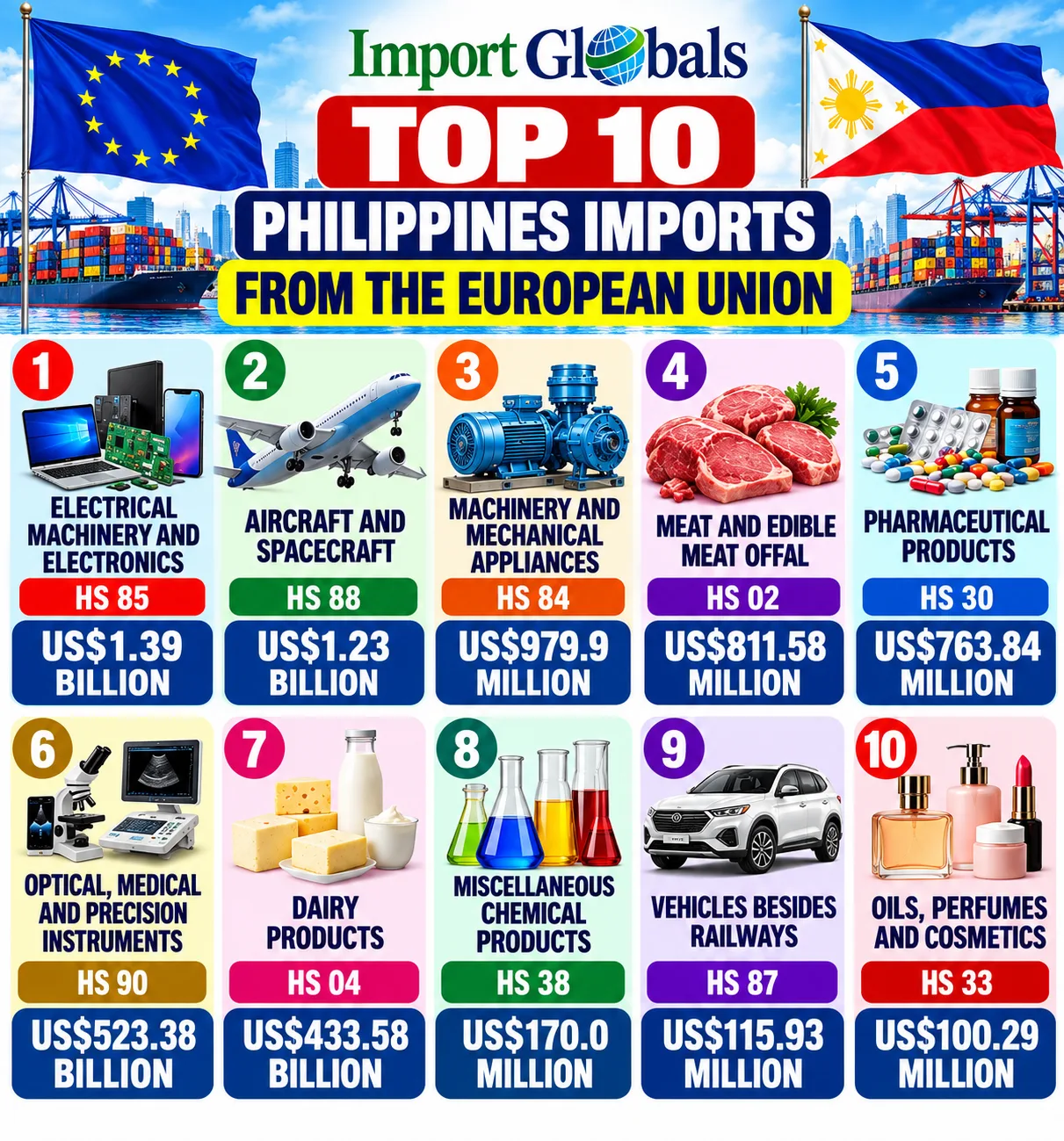
1. Electrical Machinery and Electronics (HS 85): US$1.39 Billion
The EU exports of electrical and electronic machinery have outshone other contenders among the exports to the Philippines. Manufacturers, energy providers, electronic assemblers utilize these products to ensure the availability of energy, the safety of manufacturing operations, as well as improve production efficiency.
2. Aircraft and Spacecraft (HS 88): US$1.23 Billion
Airplanes and its components make the EU one of its greatest exporters as connected to prominent producers of aviation industry, the European aircraft manufacturers. The Philippines are an end-user of such airplanes and aviation parts as its airlines and aviation service providers continuously expand their fleet and operations.
3. Machinery and Mechanical Appliances (HS 84): US$979.9 Million
The industrial equipment including machinery, engines, pumps, and certain machines supports various activities on the part of the Philippines, namely manufacturing operations and construction.
4. Meat and Edible Meat Offal (HS 02): US$811.58 Million
In terms of agrofod export from the EU, meat products, including pork and chicken, prove to be the greatest. In addition, the local demand in such food products is high, that makes meat almost among the leading imports from the EU to the Philippines, says Philippines Customs Data.
5. Pharmaceutical Products (HS 30): US$763.84 Million
Medicines, vaccines, and other pharmaceutical preparations are used in Philippine hospitals, pharmacies, and by patients. European drug makers might have power treatments that supplement local production and support their healthcare needs.
6. Optical, Medical, and Precision Instruments (HS 90): US$523.38 Million
Medical devices, diagnostic equipment, and precision instruments used by Philippine hospitals, laboratories, and industries. These goods combine advanced technology with strict quality standards that cater to the needs of healthcare and manufacturing clients.
7. Dairy Products (HS 04): US$433.58 Million
Milk, cheese, butter, and other dairy products are shipped to Philippine retailers and food manufacturers. Consumer demand is rising while local supply is limited, making European dairy an important agrofod export.
8. Miscellaneous Chemical Products (HS 38): US$170.0 Million
Miscellaneous Chemical Products are the top 8th resourced essentials of Philippines, as per Philippines Import Statistics. Philippine industries import them as specialised inputs for production and treatment processes.
9. Vehicles Besides Railways (HS Code 87): US$115.93 Million
Automobiles and vehicles together with vehicle parts come to the buyers from the European manufacturers. Buyers in Philippines appreciate the technology of the European continent, but this kind of goods is of a lesser size than machinery and electronics.
10. Oils, Perfumes, and Cosmetics (HS Code 33): US$100.29 Million
European perfumes, cosmetics, and soaps are popular among buyers in the Philippines. High level of income and interest for good quality products ensures constant demand of the products mentioned.
Top 10 Philippines Exports to the European Union
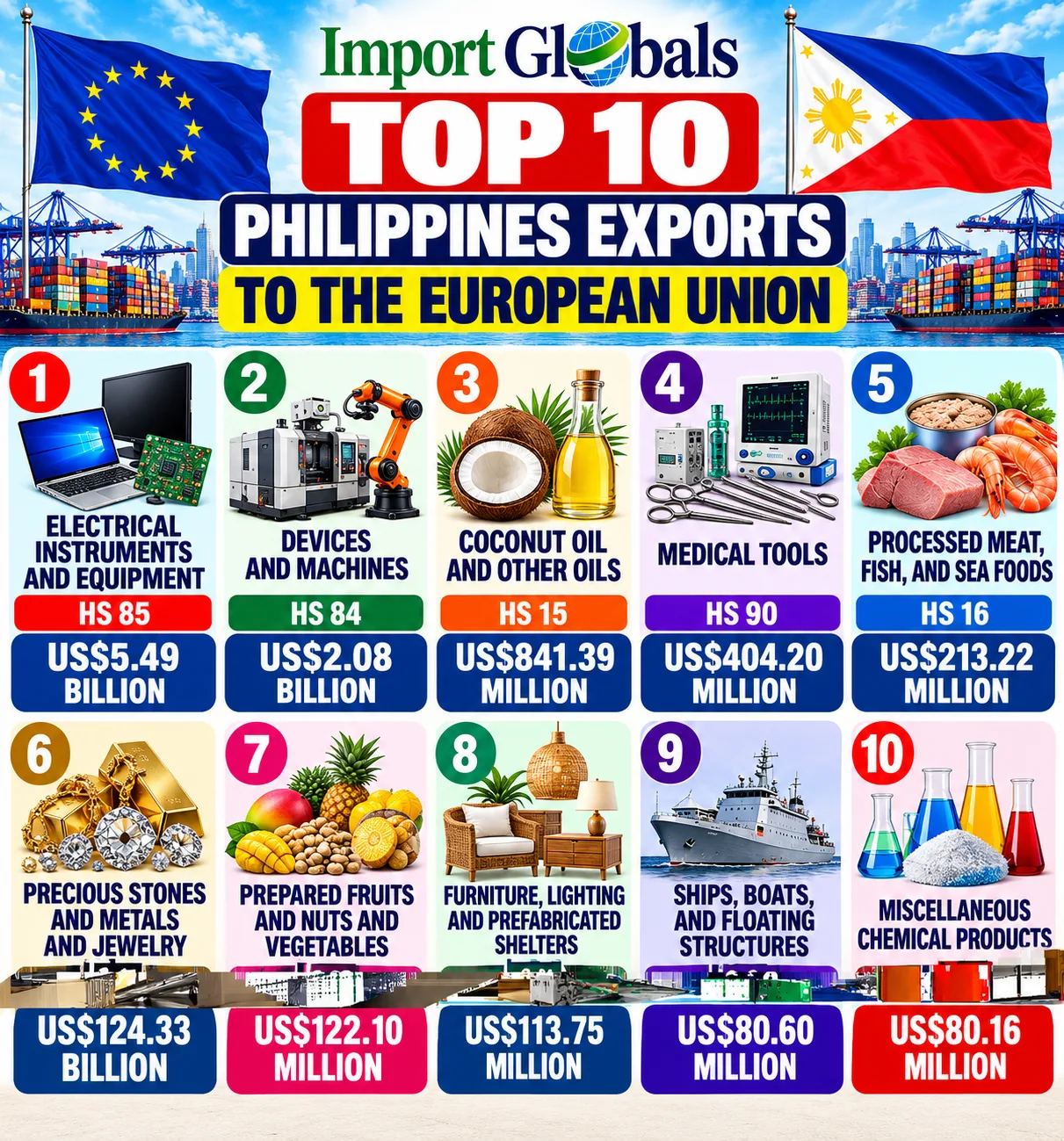
1. Electrical Instruments and Equipment (HS 85): US$5.49 Billion
Semiconductors, integrated circuits, and other electronic devices are the most shipped products from the Philippines to Europe. The European market will be looking for these products, especially for its automotive, industrial and consumer electronics sectors. Thus, electronics are of great importance in this relationship.
2. Devices and Machines (HS 84): US$2.08 Billion
Electronics and electronically controlled machines are the second-most exported goods to Europe, as per Philippines Export Data. European companies will be purchasing these products from the manufacturers in the Philippines, which are globally integrated with the electronics and engineering sectors.
3. Coconut Oil and Other Oils (HS 15): US$841.39 Million
Coconut oil is the top agricultural product exported to the EU which is used for cooking, making cosmetics, and other production. Increased interest in plant-based food and interest from the European market will help keep increased exports.
4. Medical Tools (HS 90): US$404.20 Million
Tools for electric devices as well as medical appliances fall into this category. The manufacturing capacity of the Philippines will provide for European healthcare and manufacturing needs as the country has skilled labour and competitive production costs.
5. Processed Meat, Fish, and Sea Foods (HS 16): US Dollar 213.22 Million
Canned tuna and other processed sea food are being sold to European retailers and food suppliers. Seafood that comes from the Philippines is known for its quality and consistent availability due to the tariffs that are offered to Filipino businesses.
6. Precious Stones and Metals and Jewelry (HS 71): US Dollar 124.33 Million
Gold, jewelry and other items are being exported to the EU in lesser volumes. Demand for these products is proportional to the price of metals in the world, the trends in jewelry designing and the interest shown by investors in precious metals.
7. Prepared Fruits and Nuts and Vegetables (HS 20): US Dollar 122.10 Million
Food items like pineapple and other tropical fruits are exported to different European food manufacturers and retailers. The demand for tropical tastes and for processed fruits maintains this category.
8. Furniture, Lighting and Prefabricated Shelters (HS 94): US Dollar 113.75 Million
Furniture and decorations in the homes made from rattan wood and metal are sold to European citizens and hotel and catering industries. Hand-made furniture and decor with the use of tropical materials put Philippines in the right position in the market.
9. Ships, Boats, and Floating Structures (HS 89): US$80.60 Million
Ships made in the Philippines are sold to European customers. This category may be small, but it is profitable and shows the capabilities of the Philippine shipbuilding industry.
10. Miscellaneous Chemical Products (HS 38): US$80.16 Million
This category consists of products such as additives and industrial preparations used by European producers in food, cosmetics, and similar industries. The category is small, but it contains various kinds of exports.
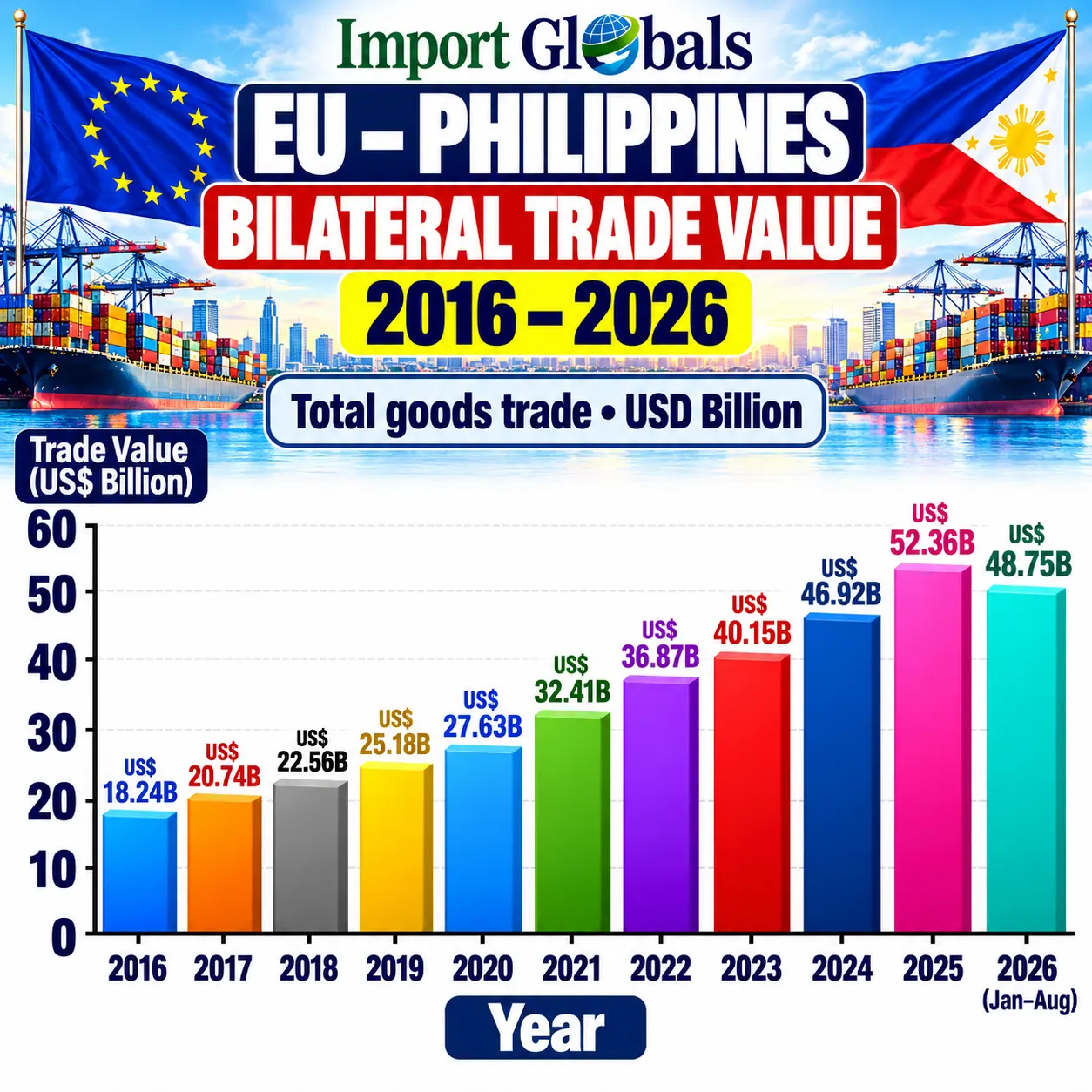
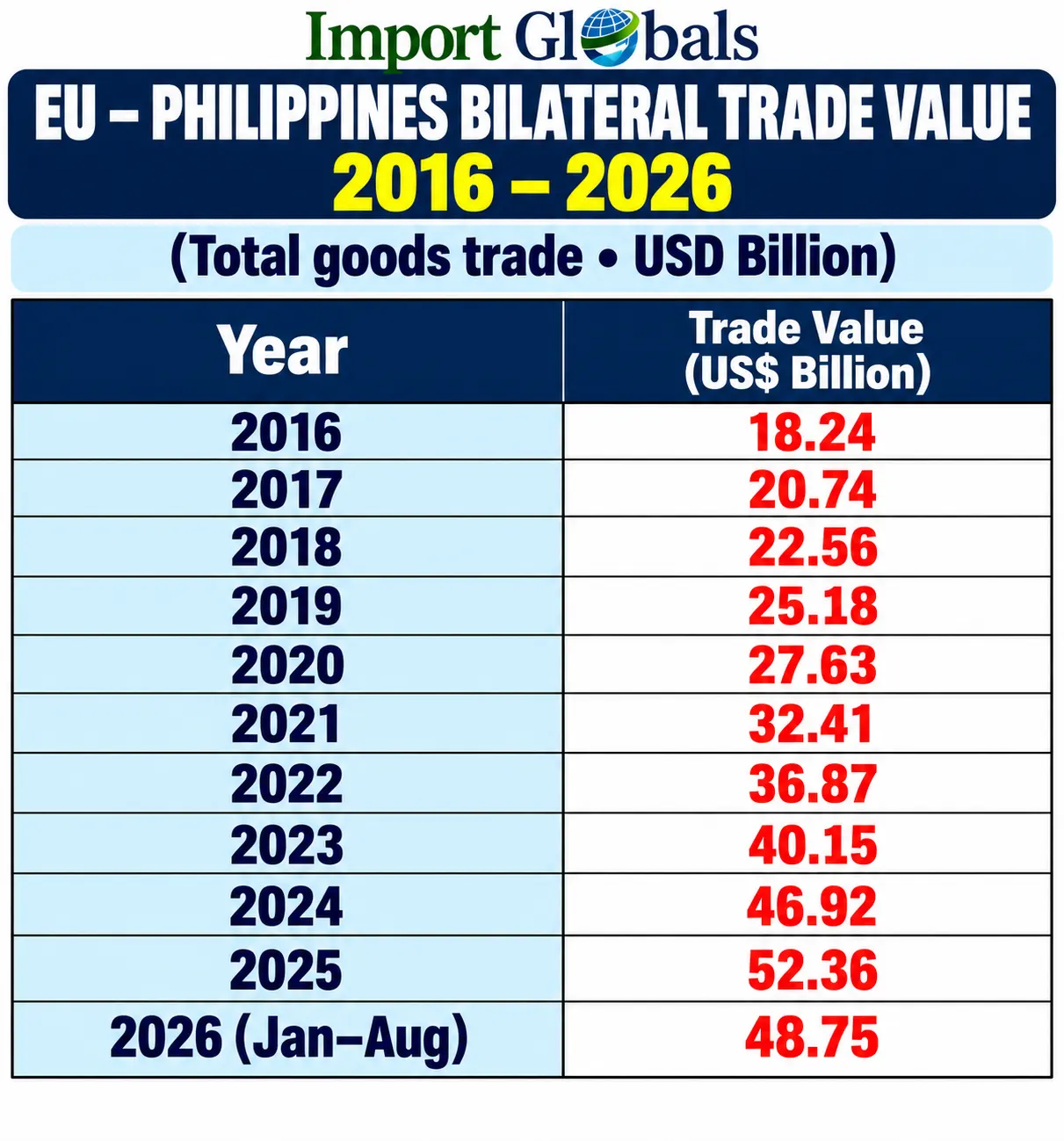
EU Philippines Trade Data of the Last 10 Years: The Bilateral Valuation and Insights
Influence on Supply Chains in Asia
One of the main consequences of the trade agreement between the European Union and the Philippines could be the effect this agreement has on supply chains in Asia.
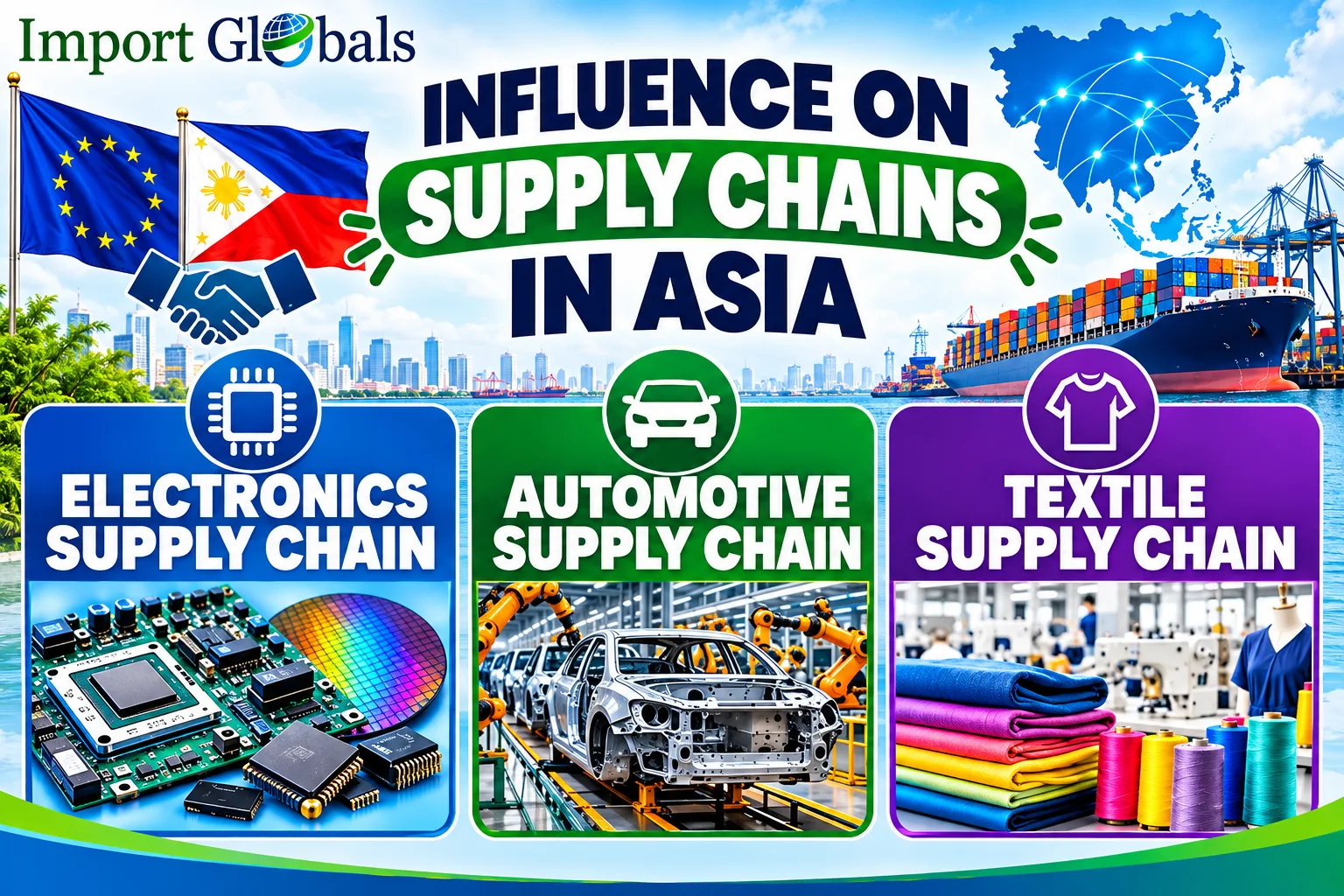
Manufacturers today rely on networks instead of working in production systems located in one country. Parts can be produced in one Asian country, then they can be assembled in another, then processed in the third, and then shipped to Europe or North America. The Philippines Trade Data reported that it may be able to become an integral part of such networks by cooperating with European companies and businesses.
1. Supply Chains in Electronics
The Philippines already has an established electronics and semiconductors ecosystem. Better access to the EU markets can lead businesses to initiate operations at the facilities located in the Philippines for production, packaging, assembly, testing, and other forms of activity.
This may also lead to the development of such segments of suppliers as machinery and equipment suppliers, packaging suppliers, logistics companies, and producers of electronic parts. Companies analysing the import data of the Philippines will be able to track changes in the volume of imports of electronic components and machines, as well as other intermediate goods and equipment.
2. The Automotive Industry Supply Chain
Automobile manufacturers highly rely on the global supply chain. Automotive components like electronic parts, wiring harnesses, high-precision parts, metallic components, and others are known to travel back and forth across many borders. Strong trade between the EU and the Philippines may open the doors for more European companies to explore business prospects in the Philippines.
3. The Textile Sector
The textile and clothing sector may hold potential as well. Manufacturers in the Philippines trying to reach the European market may gain access to clearer regulations on trade, while EU companies may find better sourcing choices in digitized Asia, reported Europe Customs Data. It is important to ensure that the rules of origin are in place so that manufacturers understand what constitutes a qualified product.
The ASEAN Initiative in the New Trade Architecture
The EU-Philippines partnership is important not only in bilateral trade. The Philippines is among the 11 ASEAN countries, and in the eyes of the European Commission, it is the seventh most important partner in trade for the EU in ASEAN. The total number of ASEAN consumers stands at around 640 million, while the Philippines is reputed to have the second largest ASEAN population.
The EU is pursuing bilateral trade treaties with the various economies of ASEAN as part of its process of creating deeper integration with the ASEAN bloc. Thus, we can see the Philippines' initiative as a part of a unique European strategic policy concerning Southeast Asia.
Moreover, other ASEAN economies are also pursuing the conclusion of treaties with the EU, which places businesses at the crossroads of deciding whether to select the Philippines over Singapore, Vietnam, Indonesia, Malaysia, or Thailand when it comes to sourcing and investing in the region. This situation results in an increasingly competitive environment in the Southeast Asian region, reported Philippines Import Trade Data.
The Impact of the Agreement on Global Commerce
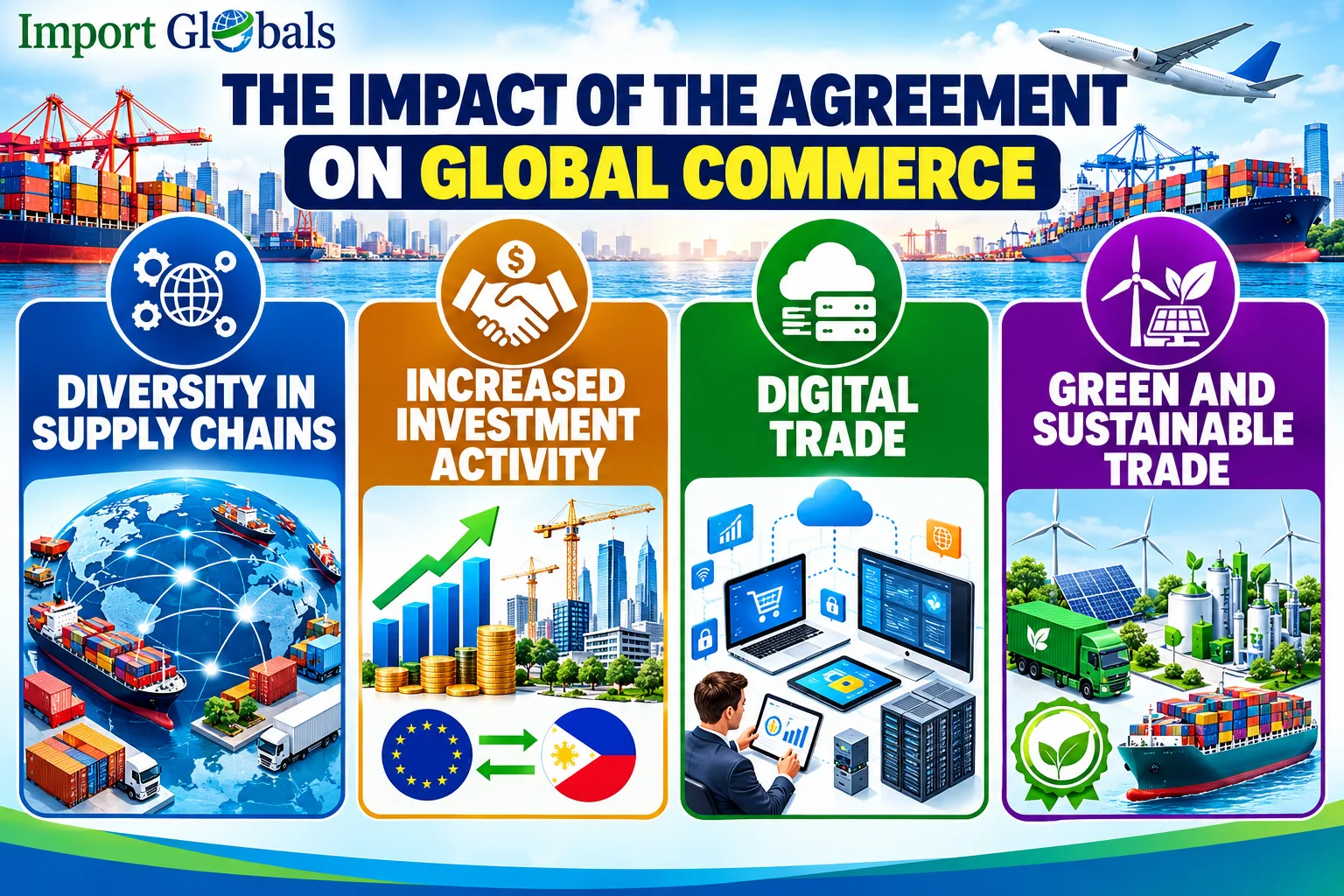
The agreement between the EU and the Philippines can impact global commerce in different ways.
Diversity in Supply Chains
Businesses may try to limit their reliance on heavily concentrated supply channels. The Philippines can be established as another site of production, supply, or distribution for businesses that operate in Europe and Asia.
Increased Investment Activity
The agreement can pave the way for a better investment situation as it will set the rules in relation to cross-border trade. It is important to note that the existing investments from the EU into the Philippines are already significant and amounted to approximately US$17.5 billion by 2022.
Digital Trade
The role of digital trade is growing in international trade. The EU is interested in digital trade deals and the establishment of better conditions for that kind of trade, reported Europe Shipments Data.
Green and Sustainable Trade
The agreement also takes sustainability matters into account. The provisions discussed in the agreement involve trade as well as sustainable development, environmental protection, labour rights, etc.
What It Means for Importers and Exporters?
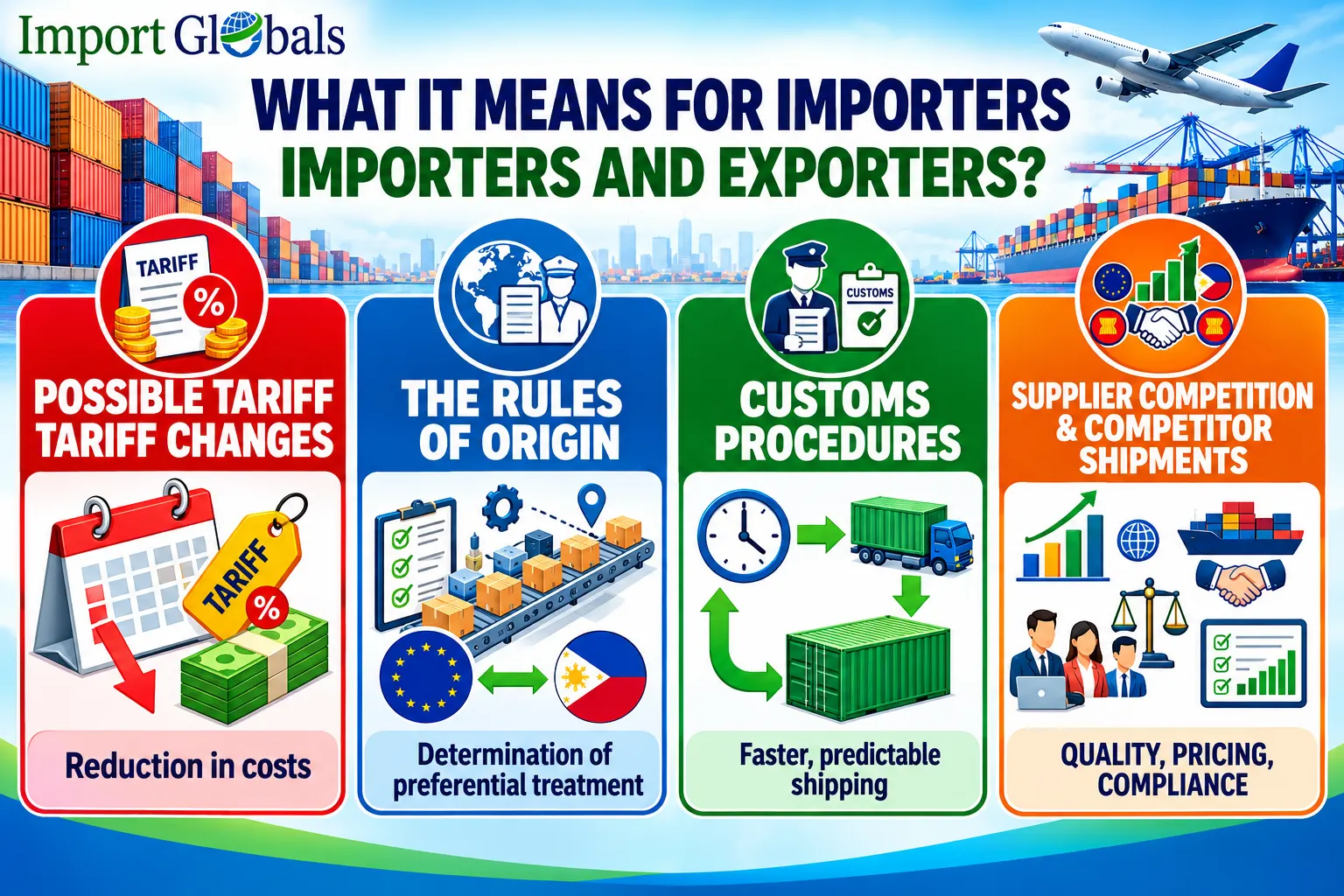
Businesses Need Information Regarding:
Possible Tariff Changes:
Businesses need to find information about the products that will be affected by the agreement and when these changes will occur.
The Rules of Origin:
If a firm uses component from different countries, it needs to determine if such components enable it to benefit from preferential treatment.
Customs Procedures:
Simplified or predictable customs processes affect shipping time and operating expenses.
Supplier Competition:
The deal enables buyers in the EU to be offered more competitors from Southeast Asia, which makes product quality, pricing, reliability, and compliance more important.
Competitor Shipments:
Information regarding shipping makes it possible to determine who has already been shipping products between the Philippines and the EU. Global Import Export Data is of great importance for firms. The data show details about shipment flow, suppliers, buyers, ports, and market movements.
Challenges That Businesses Should Watch
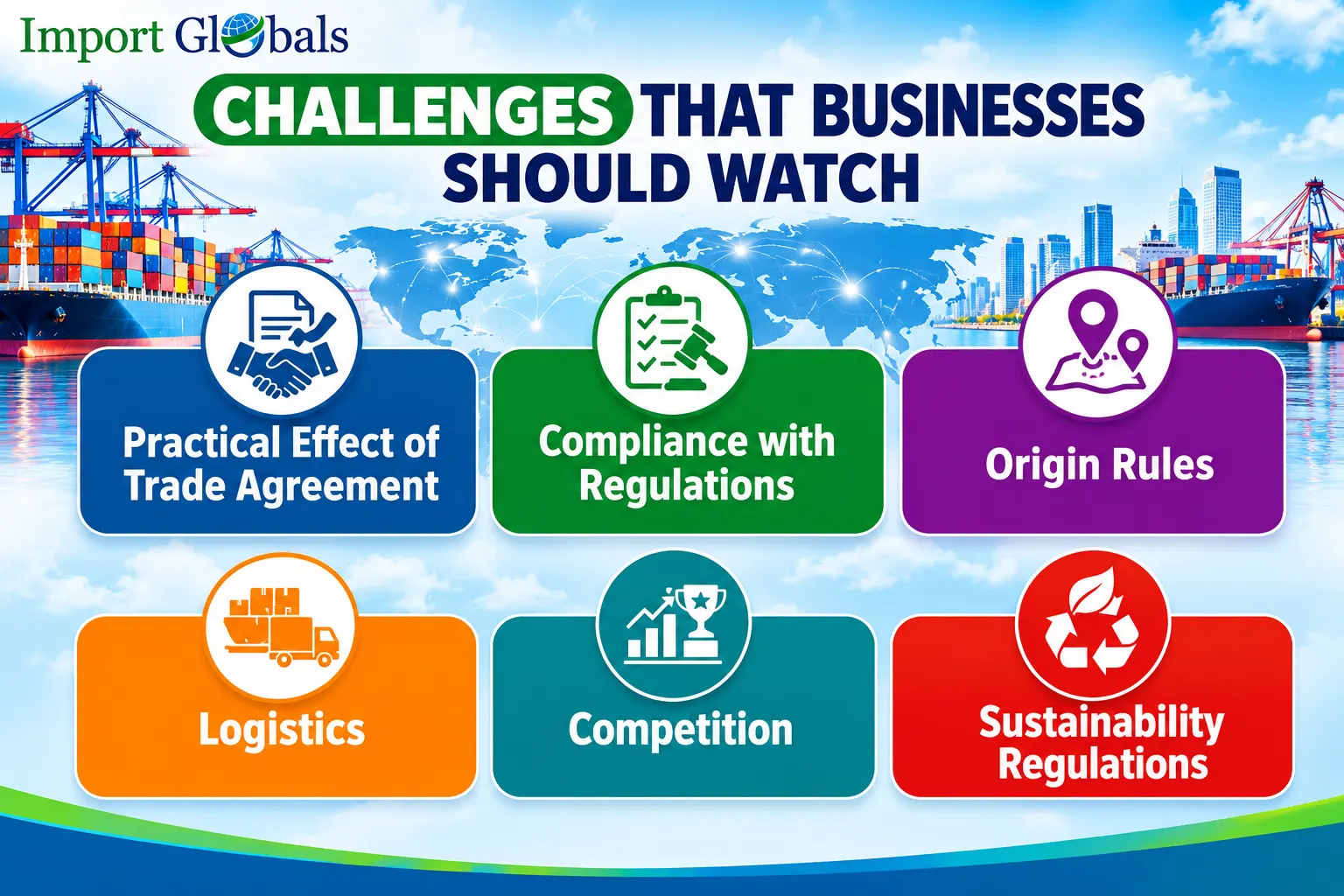
Practical Effect of Trade Agreement
Europe Trade Data said, the practical implications of the agreement will depend on its implementation and the ability of stakeholders to comply with the requirements.
Compliance with Regulations
European markets usually involve specific rules regarding machinery, chemicals, food safety, and product compliance. Thus, Philippine exporters will comply with EU requirements.
Origin Rules
It is hard to establish the origin of products due to complex international supply chains. Such information will be easily obtainable if businesses have the right documentation.
Logistics
The distance between Southeast Asia and Europe is still an important factor in terms of shipping costs, to say nothing of transit time, port capacity, and shipping conditions.
Competition
There are not only new access possibilities for the Philippine market but stiff competition as well. The competitive opportunities has been supporting the bilateral integrity.
Sustainability Regulations
There are some additional requirements related to sustainability and labour issues. Thus, companies will face increased responsibilities for compliance with regulations.
The Importance of Philippine Import Data for Business
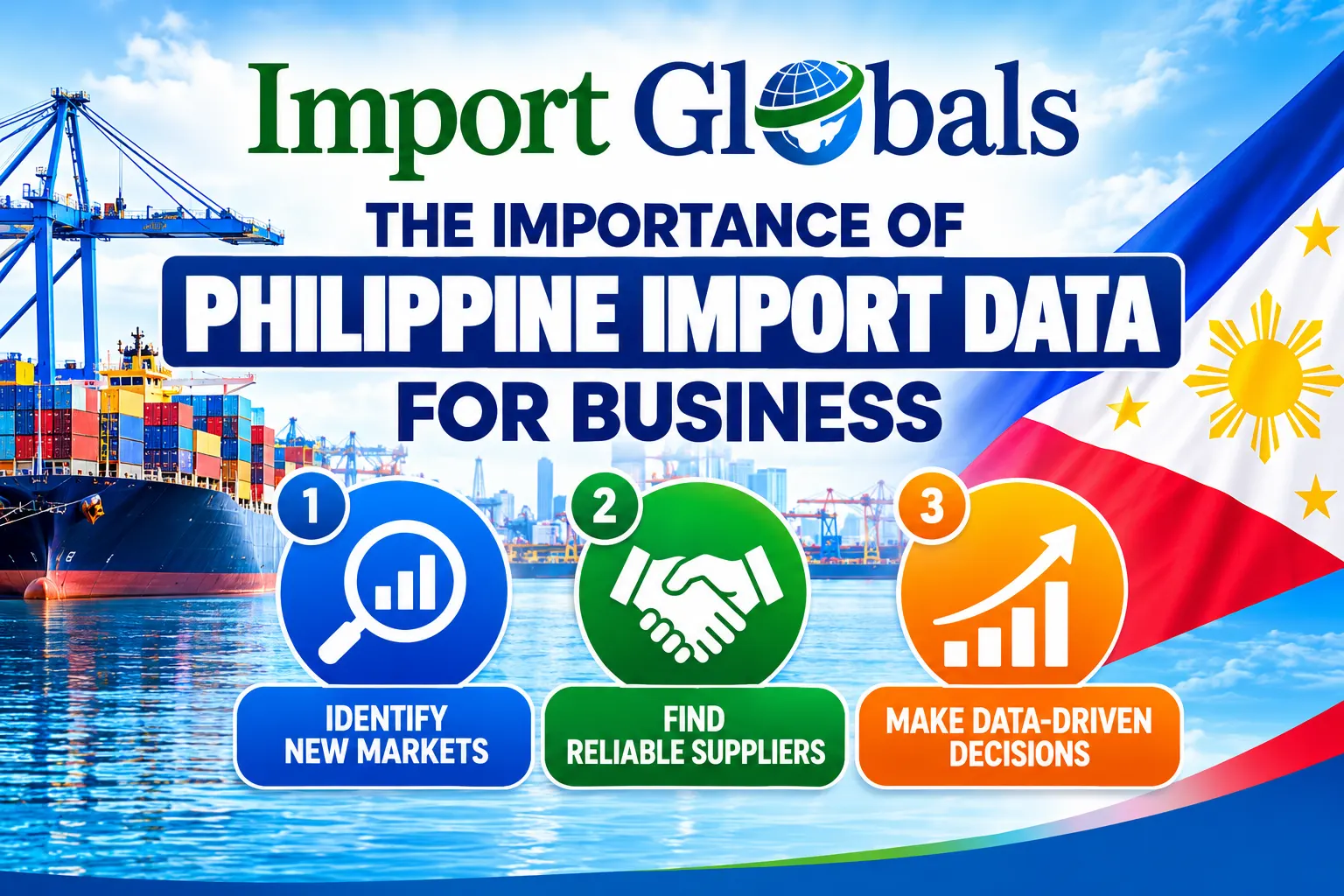
The agreement between the European Union and the Philippines has made trade intelligence essential since companies may need to figure out where different opportunities are present in terms of trade.
Philippine Import Trade Data help businesses see what products are coming to the country and where the main suppliers of those products are, allow them to calculate the import prices, look into the shipping processes, and trace the changes in demand.
To illustrate this point, a manufacturer of machinery may look into imports from the Philippines for industrial equipment and find out what the exporting countries of the equipment and the buyers are. Then the European supplier can compare this data with Europe's import-export statistics. Furthermore, businesses dealing with electronics, automobile parts, clothing, drugs, food, and industrial equipment can examine historical data on trade to find out how trade evolves over the years.
Future Outlook for Trade Between the EU and the Philippines
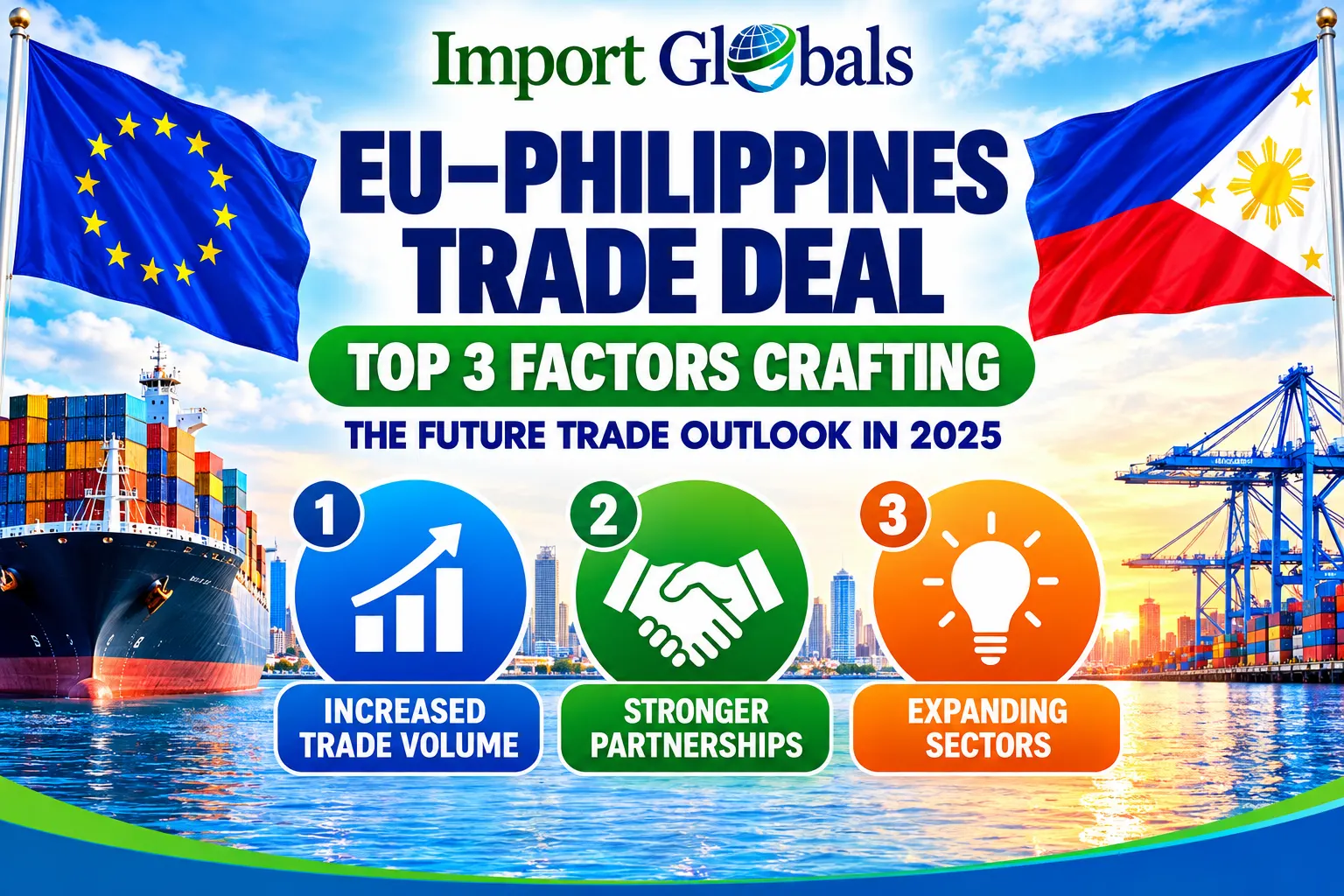
Among the factors that make the Philippines relevant in this context are its geographical location in ASEAN, a well-developed electronics industry, growing manufacturing capabilities, large internal market, and a developing services economy.
While the Philippines is playing its part, the EU continues to be one of the biggest integrated markets in the world. The agreements between the countries trigger possibilities for businesses that would be able to unite the Philippines with the EU.
The agreement may also be a further step in the EU’s attempts to penetrate the ASEAN market. The European Commission has named bilateral deals with members of ASEAN; the building stones of the future agreement between the EU and ASEAN, as per Europe Import Export Data.
Conclusion
The EU-Philippines trade agreement signifies a major milestone in the economic linkage between Europe and Southeast Asia. The bilateral trade of goods was already around US$20.0 billion in 2025, and services trade was around US$11.7 billion in 2024. Philippines Trade Data reported that the EU investments in the Philippines amounted to around US$17.5 billion in 2024, which indicates the depth of profitable ties between the two sides.
This landmark agreement, which was declared in September 2026, might provide a long-awaited framework for trade in goods and services, investments, digital trade, energy, raw materials, government procurement, sustainable development, etc.
CTA
If you are trying to get the latest updates regarding the EU-Philippines trade deal in 2025, you have landed on the right platform here. Import Globals has the special ability to provide detailed information regarding Philippines Import Data and Global Import-Export Data. The data sets support marketing insights with active trade information. Subscribe to www.importglobals.com or drop an email at info@importglobals.com to get the latest information regarding the EU-Philippines trade deal to support your international business growth.
FAQ’s
Que. What is the EU-Philippines trade deal of 2025?
Ans. The EU-Philippines trade deal of 2025 is a comprehensive FTA; that is being negotiated between the European Union and the Philippines.
Que. What is the total value of EU-Philippines goods trade in 2025?
Ans. The total value of EU-Philippines goods trade in 2025 is 20 billion US dollars.
Que. What is the total amount of service trade initiated between the EU and the Philippines?
Ans. The total amount of service trade that has taken place between the EU and the Philippines is 11.7 billion US dollars.
Que. Which Philippine industries are benefiting the traders?
Ans. Electronics, semiconductors, automotive components, and garments are the Philippine industries that are benefiting the traders.
Que. Why are free trade agreements important for Asian supply chains?
Ans. Free trade agreements are important for Asian supply chains because of their role as a sourcing and production location and the potential encouragement towards greater integration between Philippine manufacturers.
Que. Does the Philippines provide preferential access to the European Union?
Ans. Yes; the Philippines provides preferential access to the European Union, with preferential access mainly for eligible products.
Que. How does the Philippines' import-export data support business growth?
Ans. Philippines import-export data support business growth by proper identification of buyers and suppliers, analysis of market demand, and development of effective market expansion strategies.
Que. What information is available in Philippines trade data?
Ans. Philippines trade data covers importer name, exporter name, shipment date, HS code, product details, quantity, values, pricing information, origin country, importing country, and port details.
Que. How frequently is the Philippines trade data updated?
Ans. Philippines trade data is updated on a monthly basis.
Que. Where can you obtain detailed information on Philippines trade data?
Ans. Visit www.importglobals.com or drop an email at info@importglobals.com for detailed updates on Philippines trade data.
You Can Also Visit :-
- Philippines Import Data 2026: The Latest Trade Statistics and Market Insights
- Fastest-growing Export Industries of the Philippines in 2026: The Latest Exported Products and Business Opportunities
- A Look at European Countries and Trade Around the World in 2024
- Europe's Place in Global Supply Chains for Green Technology